



How much powder does 1kg of celery make? Yield and cost
1kg of fresh celery usually makes only about 40 - 50g of celery powder. In other words, a manufacturer needs about 20 - 25kg of fresh celery for every kilogram of finished powder.
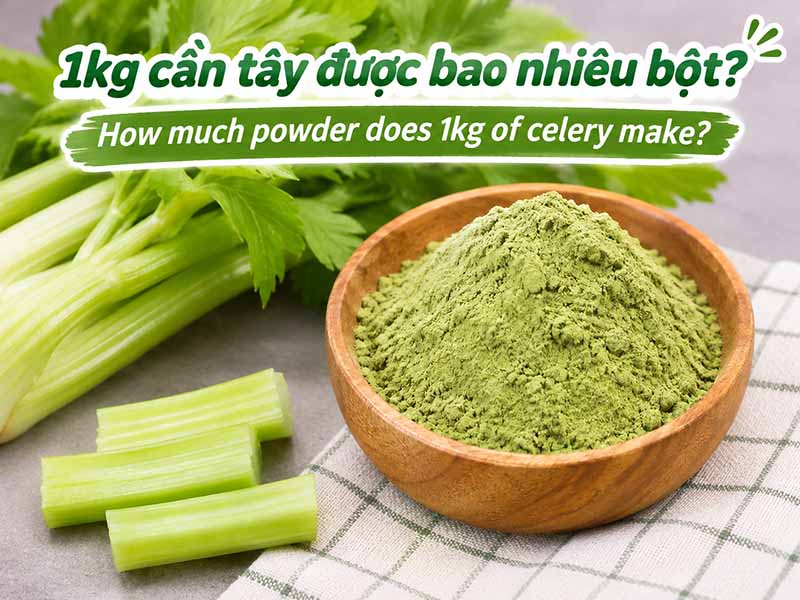
This article explains why the yield is so low, how to estimate celery powder yield for each batch of raw material and how that yield shapes the production cost of celery powder.
How much powder does 1kg of celery make?
Based on its water content, 1kg of fresh celery makes about 40 - 50g of powder at 7 - 10% moisture. The exact figure depends on how much water the celery holds, the moisture of the finished powder and how much is lost during trimming and sieving:
| Criteria | Water in fresh celery | Powder moisture | Trimming and sieving loss | Powder from 1kg of celery | Fresh celery per 1kg of powder |
| Theoretical, based on USDA data | 95.4% | 10% | 0% | about 51g | about 19.6kg |
| Drier powder for tablet pressing | 95.4% | 7% | 0% | about 49g | about 20.2kg |
| With production losses | 95.4% | 10% | 15% (assumed) | about 43g | about 23kg |
| Raw material with more dry matter | 93% | 10% | 0% | about 78g | about 12.9kg |
The third row is close to the 23kg of fresh celery per kilogram of powder that some Vietnamese suppliers publish.
However, some online sources say 1kg of celery makes 70 - 80g of powder. That only happens when the raw material holds about 93% water (much drier than the USDA figure) and almost nothing is lost in production. So when you work out how much powder 1kg of celery makes for raw material planning or for comparing quotes, use 40 - 50g to avoid running short.
Why does 1kg of powder take more than 20kg of fresh celery?
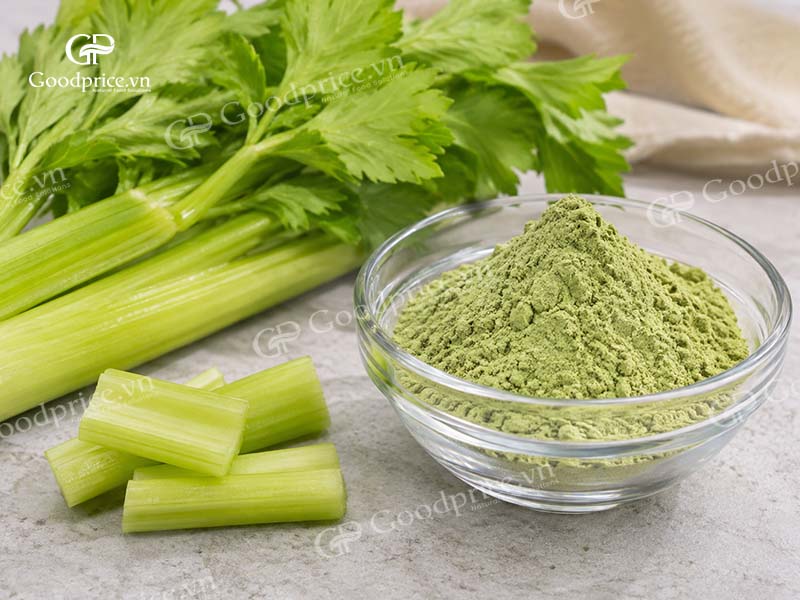
The main reason is that most of the weight of celery is water. On the way from the field to a finished bag of powder, the raw material shrinks at three stages:
- Water removed during drying: According to USDA data, fresh celery holds about 95.4g of water per 100 g. That leaves only about 46g of dry matter in 1kg of celery. Nong Lam University in Ho Chi Minh City (2020) also measured the initial moisture of fresh leafy greens, including celery, at 89 - 95%.
- Trimming losses: Roots, base ends, yellowed or bruised leaves and damaged stalks are cut away before washing. The more damaged the batch, the bigger the loss at this stage.
- Fiber and powder lost in milling and sieving: Celery powder for food use is usually sieved to 80 - 120 mesh (openings per inch). Coarse fiber that does not pass the sieve has to be milled again or removed, and a small amount of powder stays in the mill, the ducts and the packaging.
The trimming, drying and milling steps are described in detail in Goodprice's celery powder production process.
How to calculate celery powder yield
Celery powder yield is the weight of finished powder divided by the weight of fresh celery that goes into production. You can estimate it in advance with this formula:
Powder weight = Fresh celery weight × (100 - fresh celery moisture) ÷ (100 - powder moisture) × (1 - loss rate)
Here is an example for a 1,000kg batch of fresh celery:
- Work out the dry matter: Celery is 95.4% water, so 1,000kg holds about 46kg of dry matter.
- Convert to powder moisture: The finished powder has 10% moisture, so 46kg of dry matter equals about 51kg of powder.
- Subtract the losses: If trimming and sieving remove 15% (an assumed figure for illustration), the batch gives about 43kg of powder. The yield is about 4.3%, or 23kg of fresh celery per kilogram of powder.
After each batch, weigh the material at three points: raw celery at intake, celery after trimming and powder after sieving. This separates losses caused by raw material quality from losses caused by processing, so you know which stage to improve first.
What affects celery powder yield
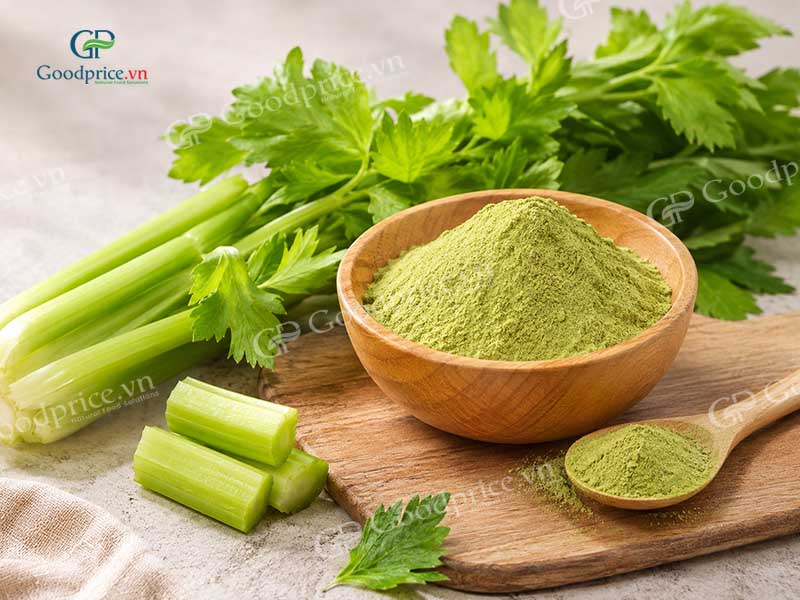
Celery powder yield varies from batch to batch because the raw material and the processing are never exactly the same:
- Leaf to stalk ratio: Data from several celery varieties published in the journal Plants (2020) show that leaves contain about 1.3 - 1.4 times more dry matter than petioles. Powder made from leafier material therefore yields more than powder made from stalks alone.
- Freshness and season: Celery that has wilted, bruised or yellowed needs more trimming. Water content also changes with variety and growing conditions, so yield is not exactly the same from season to season.
- Moisture of the finished powder: Drier powder weighs less. For tablet pressing, Goodprice keeps moisture below 7%, lower than the 10% of standard powder, so the same amount of celery gives slightly less powder.
- Drying temperature and fineness: A study in the journal Foods (2024) found that the higher the drying temperature, the harder celery stalks are to grind, the more grinding energy they need and the larger the particles. With an 80 - 120 mesh target, larger particles mean more material to regrind or remove. Drying at low temperature helps the milling step and keeps the powder green.
The right moisture and fineness also depend on the end product, such as a drink mix, tablets or a seasoning blend. You can look at the applications of celery powder in food to choose suitable specifications.
How does yield affect the production cost of celery powder?
Fresh celery is the cost that gets multiplied the most in the production cost of celery powder, because every kilogram of powder needs about 20 - 25kg of celery. The main costs are:
- Fresh celery: When the price of fresh celery rises by VND 5,000 per kg, the raw material cost of 1kg of powder rises by about VND 100,000 - 125,000. Celery prices change with the season and the weather, so powder prices move with them.
- Drying energy: To make 1kg of powder at 10% moisture, the dryer has to remove almost 19kg of water, so energy cost grows with the amount of celery going into the dryer.
- Trimming labor: Sorting, cutting and washing handle more than 20 times the weight of the powder that comes out.
- Testing: Each batch needs checks for moisture, microbiology and other safety criteria the buyer requires.
- Packaging: Celery powder absorbs moisture easily, so it needs moisture-proof packaging, often with an aluminum layer, to protect color and shelf life.
Because raw material makes up such a large share, raising yield by just a few grams of powder per kilogram of celery cuts production cost noticeably. That is why manufacturers with partner growing areas and a stable trimming process can keep production cost steady from batch to batch.
Why should unusually cheap celery powder be checked carefully?
If the quoted price is lower than the cost of the fresh celery needed for 1kg of powder, check the product carefully before you order.
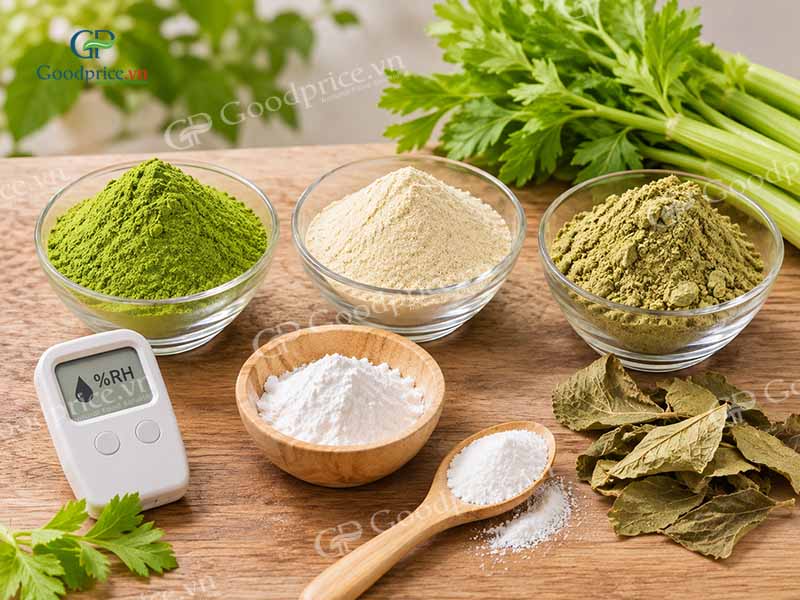
Common possibilities:
- High moisture: Powder that still holds a lot of water has less dry matter per kilogram, cakes more easily and loses quality faster in storage.
- Added ingredients: The powder may be blended with starch, maltodextrin or other vegetable powders to lower the price. These ingredients must be declared on the label and in the ingredient list.
- Poor raw material: Powder made from yellowed leaves or old, fibrous stalks tends to look dull, smell weak and struggle to reach the required fineness.
Before placing a large order, take these three steps:
- Ask for the certificate of analysis (COA): The COA for the actual batch should show moisture, fineness and microbiological criteria.
- Test samples in your real formula: Compare color, aroma and solubility once the powder is mixed into your product, not just the dry powder.
- Ask about the raw material: The supplier should state whether the powder is made from stalks, leaves or both, and whether anything else is blended in.
However, a low price does not always mean poor quality. A direct manufacturer with large volumes and a stable raw material supply can lower its raw material and drying cost per kilogram of powder.
Goodprice produces cold-dried celery powder from fresh celery stalks and leaves, at 80 - 120 mesh and moisture ≤ 10%, with wholesale orders from 10kg and a capacity of 20 tons per month. You can send a quote request for celery powder as a raw material with your specifications, expected volume and intended use, and we will advise you and share the certificate of analysis.
FAQ
How much fresh celery do you need for 100g of celery powder?
About 2 - 2.5kg of fresh celery, based on 40 - 50g of powder per kilogram of raw material.
How much fresh celery equals 3g of celery powder?
About 60 - 75g of fresh celery. The figure changes with the water content of the raw material and the moisture of the powder.
Does cold-dried celery powder need more celery than hot-air-dried powder?
No. The amount of powder depends mainly on the dry matter in the raw material and the final moisture of the powder. However, celery dried at high temperature is harder to grind fine, so it may lose more during milling and sieving.
Is it cheaper for a business to dry its own celery powder than to buy it?
It depends on volume. Besides raw material, drying in-house needs dryers, mills, sieves, trimming labor and batch testing. For small or irregular volumes, buying powder or outsourcing production can make costs easier to control.