

Why Naturally Purple Yam Powder Costs More
Natural purple yam powder is more expensive than dyed powders and purple sweet potato powder because three costs stack up. The yam takes 6 to 10 months to grow, several kilos of fresh yam make one kilo of powder, and the roots must be dried at low temperature to keep their color.
Compare ube powder price by the kilo alone and you may end up paying less for a different purple powder. This guide puts numbers on each cost, compares real ube with cheaper options, and shows when the premium pays off. It comes from Goodprice Vietnam, a purple yam powder manufacturer.
Made from 100% selected fresh ube (purple yam) tubers, with a natural purple colour, fine texture and full characteristic flavour. An ideal solution for colour and texture in bakery, mooncake fillings, beverages and food processing, produced to ISO 22000:2018.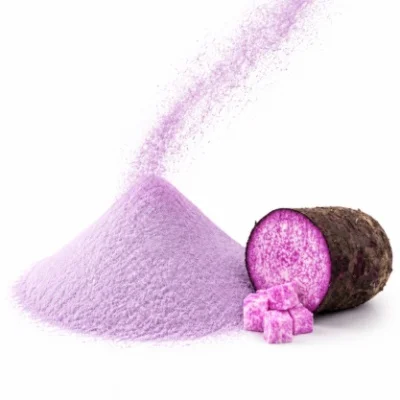
What is natural purple yam (ube) powder?
It is a powder made only from purple yam, Dioscorea alata, so the purple color comes from the root itself rather than from dye. The roots are peeled, steamed, dried and milled, which are the core steps of the purple yam powder production process.
Many purple powders sold as ube take their color from purple sweet potato or dye, so natural only means something when the label lists a single ingredient.
The pigments are anthocyanins, the same family found in other purple vegetables. Their level ranges from about 10 to 90 mg per 100 g of dried yam, depending on the line and the age of the root. Two genuine batches of natural ube powder can therefore differ in shade.

Why is natural purple yam powder more expensive?
Three costs stack up before the powder is bagged: a slow crop, several kilos of yam per kilo of powder, and slow drying at low temperature to protect the color.
A slow crop with one harvest a year
Purple yam needs about 6 to 10 months in the ground, depending on variety and region, far longer than purple sweet potato. In Thanh Hoa district (former Long An, now Tay Ninh), farmers plant around December and harvest from June to August, so a field gives roughly one crop a year.
Japanese purple sweet potato grown in Vietnam is harvested after about 4 to 5 months and yields 20 to more than 30 tons per hectare. Yam in Thanh Hoa averages about 15. That alone makes each kilo of fresh yam cost more before it reaches the factory.
Global demand keeps root prices high as well. Philippine ube output fell to 12,483 tons in 2025, the country suspended fresh ube exports to protect planting material, and it has imported ube products from Vietnam. For buyers weighing Vietnamese vs Philippine ube powder, that tight supply is part of the price.
Several kilos of yam for one kilo of powder
Fresh yam is roughly two-thirds to three-quarters water, so very little weight is left once it is dried. Dry matter ranges from about 22% to 34%, depending on the variety, and drying brings the powder below 10% moisture.
That works out to an estimated 3 to 4 kg of peeled yam per kilo of powder. Peeling removes another 15% to 30% of the harvested weight, so counted from the field, it takes roughly 3 to 6 kg. These are estimates based on dry matter, not a figure from any one factory.
Pale, dull or immature roots are also sorted out, because they pull down the color of a whole batch. Goodprice sorts roots by color, maturity and uniformity, so the price per kilo of powder carries both the root cost and the rejected share.

Steaming and low-temperature drying
The purple pigment breaks down under high heat, so keeping the color means drying slowly at low temperature, which costs time and power. The three common methods sit at three cost levels:
- Hot-air drying: The cheapest and fastest, but the color dulls easily and high heat can leave a bitter note.
- Low-temperature drying: Uses air dried by a heat pump at about 35 to 60 °C. It keeps more color, but drying takes longer and uses more power.
- Freeze-drying: Freezes the yam, then removes the water under vacuum. It keeps the most color and costs the most.
Spray drying is cheaper at scale, but it usually needs a carrier such as maltodextrin, so the powder is no longer 100% yam. Goodprice steams the roots first, then dries them at low temperature.
How does real ube powder compare with cheaper purple powders?
All three give a purple color, but they differ in where the color comes from, how long the raw crop takes, and what they cost. The table compares them on six points.
| Point | Real ube powder | Purple sweet potato powder | Dyed purple powder |
|---|---|---|---|
| Color source | Anthocyanins in the yam | Anthocyanins in the sweet potato | Synthetic dye added to a base powder |
| Crop time | 6–10 months | 4–5 months | Not tied to a harvest |
| Relative price | Highest | Lower | Lowest |
| Color when baked or alkaline | Fades, turns green with baking soda | Similar to ube | More stable across pH |
| Flavor | Mildly sweet, nutty, vanilla-like | Sweeter, more earthy | Depends on base and flavoring |
| Botanical name on label | Dioscorea alata | Ipomoea batatas | Dye code, e.g. FD&C |
Natural colors in general cost several times more than synthetic dyes, in some cases up to 15 times more, so natural ube powder rarely matches the price of dyed powder.
Several marketplace listings even sell purple sweet potato powder as ube, which is one reason ube looks cheap in some places. The label is where purple yam vs purple sweet potato powder becomes clear.
How much color and flavor does ube powder keep?
Careful drying keeps most of the yam's color and mild, nutty flavor, but the natural color fades in the oven and shifts with acidity.
- Color: Natural ube powder stays purple, with shade varying by batch. One study measured about 38 mg of anthocyanins per 100 g of yam but only about 3 mg per 100 g of the finished cake. Acid pulls the color toward pink, and baking soda turns it green.
- Flavor: Mildly sweet and nutty with a vanilla-like note. Hot-air or sun drying can leave the powder bitter, while low-temperature drying and milling keep it mild.
The premium buys real yam color and flavor, not the stability of a synthetic dye. Long bakes and recipes heavy on leavening need to plan for some color loss.

When is real ube powder worth the extra cost?
The premium pays off when your product is sold as ube. If you only need a purple shade, cheaper color sources exist. So compare ube powder price by the job it does in your recipe, not by price per kilo alone.
- Choose real ube powder when: The product name or label says ube or purple yam, so the ingredient has to match. Your recipe needs yam flavor, not just color, as in ube lattes, ice cream or fillings. You sell into markets that read labels closely and want a short list with no dye codes.
- You may not need it when: You only want a purple tint for jellies, toppings or cake layers that are not sold as ube. Purple sweet potato powder or other purple colors usually cost less there. Low-price lines rarely justify the premium either.
How is Goodprice ube powder made?
Goodprice makes its pure purple ube powder from 100% purple yam that is steamed, then dried at low temperature to below 10% moisture and milled to 80 to 120 mesh, with no preservatives. Roots come mainly from Long An (now Tay Ninh) and are sorted by color and maturity.
The powder is produced at our ISO 22000:2018 factory in Ba Diem, Ho Chi Minh City, with capacity of about 100 tons a month. It ships in 25 kg bags with a 12-month shelf life.
We quote ube powder price per lot, by volume, packing and FOB or CIF terms, and send samples before you order. The Goodprice Vietnam R&D team can help with formulation or OEM.
Goodprice manufactures and supplies ube (purple yam) powder in bulk to food factories, OEM brands and importers. Direct control of raw-material sourcing, flexible MOQ, and OEM production to your own formula and packing specification.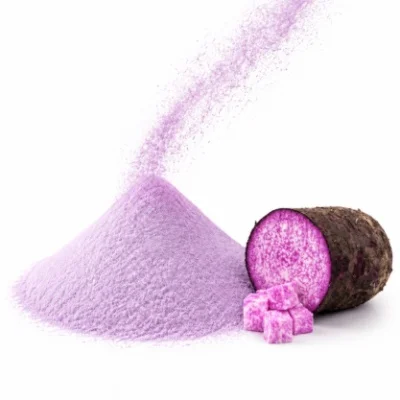
Frequently asked questions about natural ube powder
How much does ube powder cost?
Roughly $4 to $25 per 100 g at US retail, and about $85 for a 1 kg bulk bag. Prices far below that usually point to a blend rather than pure yam.
Which is the best ube powder to buy?
One whose label lists only Dioscorea alata, with no sweet potato, carrier or dye, and whose color and flavor fit your recipe in a small test batch.
What is purple yam powder good for?
Mostly color and flavor in lattes, ice cream, cakes, fillings and breads. Steamed powder mixes into warm liquid and is ready to use without cooking.
Why are some ube powders so cheap?
Usually because they are not 100% ube. Purple sweet potato, starch, maltodextrin or dye can replace part of the yam, so check the ingredient list and botanical name.
Is ube the same as purple sweet potato?
No. Ube is purple yam, Dioscorea alata, which takes 6 to 10 months to grow. Purple sweet potato is Ipomoea batatas, a sweeter root harvested in about four to five months.
Conclusion
Natural purple yam powder costs more because the crop takes six to ten months, several kilos of yam make one kilo of powder, and drying has to stay cool. If your product is sold as ube, contact Goodprice Vietnam at [email protected], +84 916 112 833 or +84 906 368 199 for a lot quote and samples.
Note: the yam-to-powder figures in this article are estimates based on published research. Specifications and prices for each lot should be confirmed with your supplier.