

Difference Between Purple Yam Powder and Purple Sweet Potato Powder Before Buying
Ube powder vs purple sweet potato powder is not a choice between two names for one ingredient: ube powder comes from the purple yam Dioscorea alata, purple sweet potato powder from Ipomoea batatas. Mixing them up shows in the product, like an ube latte that tastes of sweet potato.
The R&D team at Goodprice Vietnam mills both powders. Below: eight differences, a batch check and the specs to request.
Where do ube and purple sweet potato powder come from?
Ube powder and purple sweet potato powder come from unrelated plants: ube is the purple yam Dioscorea alata, while purple sweet potato is Ipomoea batatas, from the morning glory family. That matters when buying, because the ube name still appears on bags of sweet potato.
- Ube powder: Made from purple yam with rough brown skin. Our yams come mainly from the purple yam growing area in former Long An, now Tay Ninh province.
- Purple sweet potato powder: Made from thin-skinned, purple-fleshed sweet potato, including Okinawan varieties.


Both follow our ube powder process of steaming, freeze-drying and milling, so any difference comes from the root.
Vietnamese and Philippine ube powder share one species and differ only by variety and region. Taro (Colocasia esculenta) is a third plant, and ube extract is a flavoring, not a powder.
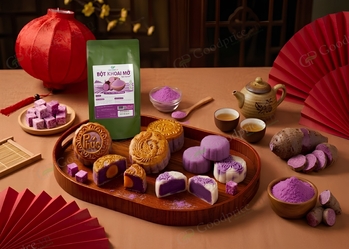
Made from 100% selected fresh ube (purple yam) tubers, with a natural purple colour, fine texture and full characteristic flavour. An ideal solution for colour and texture in bakery, mooncake fillings, beverages and food processing, produced to ISO 22000:2018.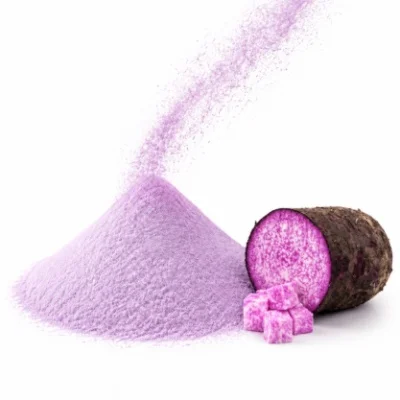
Ube powder vs purple sweet potato powder: 8 differences
They differ most in flavor and thickening, and least reliably in color, which is why color alone is a poor way to tell them apart. Here they are side by side.
| Criterion | Ube powder | Purple sweet potato powder |
|---|---|---|
| Source plant | Purple yam, Dioscorea alata | Purple sweet potato, Ipomoea batatas |
| Dry powder color | Lighter, pink-leaning lavender | Deeper purple |
| Color in acid or alkali | Pink with acid, blue-gray with baking soda | Shifts the same way |
| Flavor | Mild, nutty, vanilla-like, low sweetness | Clearly sweet, sweet potato taste |
| Body when mixed | Thick, smooth | Lighter, thinner |
| Typical uses | Ube lattes, ice cream, fillings, chiffon cake | Steamed buns, bread, noodles, tapioca pearls, snacks |
| Growing time | 6–10 months | 4–5 months |
| Relative price | Usually higher | Usually lower |
Color in the bag and in the finished product
In the bag, ube powder usually looks lighter than purple sweet potato powder, so a deeper shade says nothing about quality or purity.
- Ube powder: A pale, pink-leaning lavender that gives a pastel purple drink in milk.
- Purple sweet potato powder: A deeper purple straight from the bag, which is why brands pick it when color comes first.


Both colors come from anthocyanins, pigments that shift with acidity: lemon juice or yogurt pushes them toward pink, baking soda toward blue-gray. The bag and the finished cake can look quite different.
Both powders contain the more heat-tolerant, acylated form of these pigments. Yet sources disagree on which holds color better in the oven, and we found no study comparing the two directly. Bake a test batch at your real time and temperature.
Flavor and sweetness
Purple sweet potato powder tastes noticeably sweeter, while ube powder is mild, nutty and only lightly sweet.
- Ube powder: Nutty with a soft vanilla note and a slightly rich finish, the flavor people expect from ube lattes and desserts.
- Purple sweet potato powder: Clearly sweet, with an earthy sweet potato taste most people recognize at once.
Much of a sweet potato's sweetness forms during cooking. As the roots steam, the enzyme beta-amylase breaks cooked starch down into maltose, and the amount of maltose largely sets how sweet the root tastes. Steamed purple sweet potato powder carries that sweetness into every batch.
So for a product sold as ube, switching powders changes a flavor regular customers will notice. If you switch anyway, retaste and adjust the sugar.
Thickening in drinks and fillings
At the same dosage, ube powder gives a thicker drink and a firmer filling than purple sweet potato powder.
- Ube powder: Mixes smooth and thick, and fillings hold their shape, so ube lattes come out creamier.
- Purple sweet potato powder: Lighter and more crumbly, giving thinner drinks and softer fillings at the same ratio.
Both powders are steamed before drying, so their starch is already gelatinized and swells even in cool liquid. Ube's body does not come from raw-yam slime: studies on related yam species show steaming and drying sharply cut the viscosity of that mucilage.
What remains is starch and the high water-holding capacity of yam flour. For drinks, whisk the powder into a little warm water first, then add milk or tea.

Should you use ube powder or purple sweet potato powder?
Match the powder to your label: if the product says ube or needs body, use ube powder, and if it only needs color, purple sweet potato powder does the job for less. For a manufacturer, switching mid-run changes flavor, the ingredient list and unit cost at once.
When ube powder is worth paying for
Ube powder is the right call when the product carries the ube name or needs body that purple sweet potato powder cannot give:
- Ube drinks: Lattes, milk teas and blended drinks rely on the nutty flavor and creamy body customers link to ube.
- Ice cream and yogurt sold as ube: A sweet potato note reads as the wrong product.
- Mooncake fillings and chiffon cakes: Fillings must stay cohesive in the oven, and the sponge gets ube's softer purple.
- Puddings and dessert soups: The powder adds body and color together, so you need less thickener.
If the product is sold as ube, do not swap in purple sweet potato powder. The flavor drifts and the ingredient list no longer matches the pack. Specs and packing options are on our ube powder page.
When purple sweet potato powder is the better buy
Purple sweet potato powder makes sense when color is the main goal and the product is not sold as ube:
- Steamed buns, bread and noodles: Doughs need an even, deep purple, and the mild sweetness stays out of the filling's way.
- Tapioca pearls, jellies and snacks: The color stands out, and the built-in sweetness suits desserts.
- Drinks labeled as purple sweet potato: These need no ube flavor.
Purple sweet potato is harvested after four to five months, purple yam after six to ten, so its powder usually costs less. If color is all you need, skip the ube premium.
You can also blend the two for ube's body and the deeper color of purple sweet potato. List both on the label and test the ratio on a small batch. Samples of our purple sweet potato powder are available for side-by-side trials.
How do you check that a delivered batch is the right powder?
Check paperwork first, then mix and taste, rather than judging the color in the bag:
- Match the scientific name: For ube powder and purple sweet potato powder, the spec sheet, COA and label should state Dioscorea alata or Ipomoea batatas. Ube or purple powder alone is not enough.
- Compare with a reference sample: Set it beside an approved sample under the same light and query any clear color gap.
- Mix and taste: An ube powder that tastes distinctly sweet and smells of sweet potato in warm water is most likely purple sweet potato.
- Run an acid and alkali check: Add lemon juice to one portion and baking soda to another. Natural pigment turns pink and blue-gray, while color that barely moves suggests added dye.
- Send it to a lab if doubt remains: Step 4 is only a screen, and confirmation takes lab testing.

Our guide to pure vs blended ube powder covers signs of added starch or dye.
What specs should you ask your supplier for?
Ask for a spec sheet listing the scientific name, process, moisture, mesh, shelf life and MOQ, plus a sample from the same lot. Here are the specs of our ube powder and purple sweet potato powder for reference.
| Spec | Ube powder | Purple sweet potato powder |
|---|---|---|
| Raw material | 100% purple yam | 100% purple sweet potato |
| Process | Steamed, freeze-dried, finely milled | Steamed, freeze-dried, finely milled |
| Moisture | Under 10% | Under 10% |
| Fineness | 80–120 mesh | 80–120 mesh |
| Shelf life | 12 months | 12 months |
| MOQ | 10 kg | 10 kg |
With identical processing specs, compare flavor, color and body in your own formula.
Goodprice Vietnam makes both powders
Both powders are made at the Goodprice Vietnam factory in Ba Diem commune, Ho Chi Minh City, under an ISO 22000:2018 food safety system. That gives you one supplier for both:
- One order, both powders: Buy ube powder and purple sweet potato powder together, from 10 kg each.
- Side-by-side samples: Get both samples at once to compare flavor, color and body in your formula.
- OEM: Through our OEM service, develop a formula that blends the two and pack it under your own brand.

Factory-sourced purple sweet potato powder, with a natural purple colour and a sweet, nutty taste. Used in bakery, beverages and natural colouring. Produced under an ISO 22000:2018 food safety system.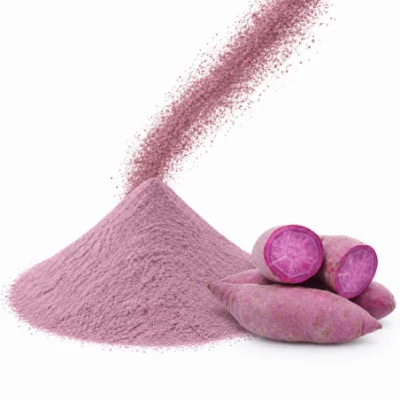
Ube vs purple sweet potato powder FAQs
Is purple sweet potato powder the same as ube powder?
No. Ube powder is made from purple yam (Dioscorea alata) and purple sweet potato powder from Ipomoea batatas. They differ in flavor, body and price.
What is the difference between ube, taro and purple sweet potato?
They are three different plants. Ube is a yam, taro is a corm with pale, purple-flecked flesh, and purple sweet potato is a sweet potato with a sweeter taste.
Can you substitute purple sweet potato powder for ube powder?
Yes for color, but not in a product sold as ube. The swap makes the result sweeter, earthier and thinner than customers expect.
Is Okinawan sweet potato the same as ube?
No. Okinawan and other Japanese purple varieties are sweet potatoes, so a powder made from them is purple sweet potato powder, not ube powder.
Which powder holds its color better when baked?
There is no settled answer, because we found no study comparing the two directly. Both shift color with acidity and baking soda, so bake a small test batch first.
Conclusion
Same purple, different products: ube powder and purple sweet potato powder diverge in flavor, body and cost. Choose by the name on your label, then check each batch with the spec sheet and a mix test.
For samples or help choosing, contact the Goodprice Vietnam R&D team at [email protected] or +84 916 112 833.
Note: For technical reference only. Test on your actual product before scaling up.