



Dextrose vs sucrose vs glucose syrup in food manufacturing
Dextrose, table sugar (sucrose) and glucose syrup are all used to sweeten food, but they differ in sugar type, physical form and sweetness. Dextrose is a powdered simple sugar about 70 - 75% as sweet as table sugar. Glucose syrup is a solution of several sugars, ranging from about half to 70% of the sweetness of table sugar depending on its DE.
This article compares the three sugars on the points that matter in production, suggests which one to use for baked goods, confectionery, ice cream and beverages and explains how to blend them in a formula.
What are dextrose, sucrose and glucose syrup?
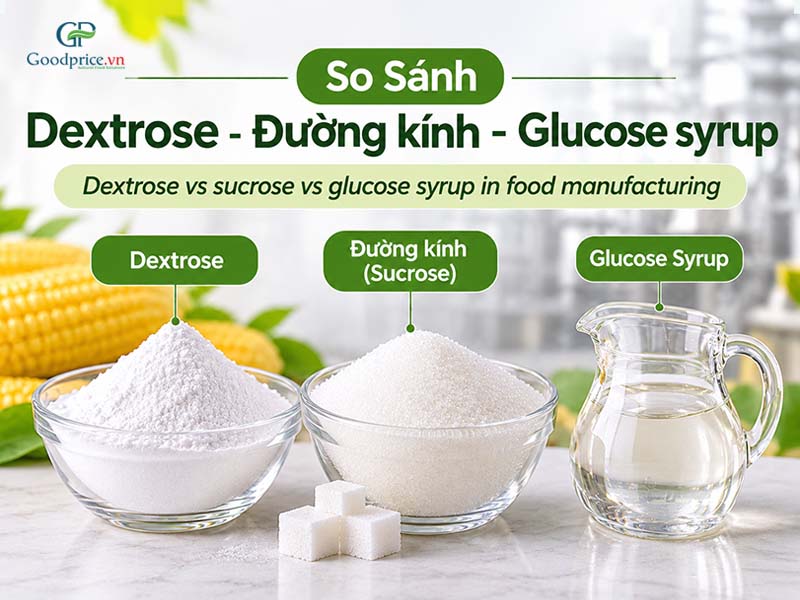
The three sugars come from different sources and processes:
- Table sugar (sucrose): A disaccharide made of one glucose and one fructose unit, refined from sugarcane or sugar beet. It is the 100% reference for sweetness.
- Dextrose: D-glucose in crystalline powder form, made by fully hydrolyzing corn or cassava starch, then refining and crystallizing it.
- Glucose syrup: A thick solution made by partly hydrolyzing starch, containing glucose, maltose and longer sugar chains. Under the US standard, glucose syrup has at least 70% solids and a dextrose equivalent (DE) of at least 20.
Dextrose and glucose syrup both come from starch. The difference is that dextrose is hydrolyzed all the way to glucose, while glucose syrup stops partway.
Comparison table: dextrose, sucrose and glucose syrup
The table below puts the three sugars side by side on the criteria that directly affect your formula and production line:
| Criteria | Dextrose | Table sugar (sucrose) | Glucose syrup |
| Source | Corn or cassava starch | Sugarcane, sugar beet | Corn or cassava starch |
| Sugar type | Monosaccharide (glucose) | Disaccharide (glucose + fructose) | Mix of glucose, maltose and longer chains |
| Form | Crystalline powder | Crystals | Thick liquid |
| Sweetness (sucrose = 100) | About 70 - 75 | 100 | About 50 (42 DE) to 70 (63 DE) |
| Reducing sugar, Maillard browning | Yes, browns quickly | No | Yes, stronger as DE rises |
| Crystallization control | Not its main role | No, crystallizes easily | Good |
| Moisture retention | Yes | Lower | Good |
| Freezing point depression (sucrose = 100) | About 190 | 100 | About 90 (44 DE) |
These figures are common industry reference values. The sweetness and freezing point depression of glucose syrup vary with its DE and each manufacturer's composition, so check them against the spec sheet of the actual batch.
How are dextrose and sucrose different?
Dextrose and sucrose differ first in structure: dextrose is a simple sugar, sucrose is a disaccharide.
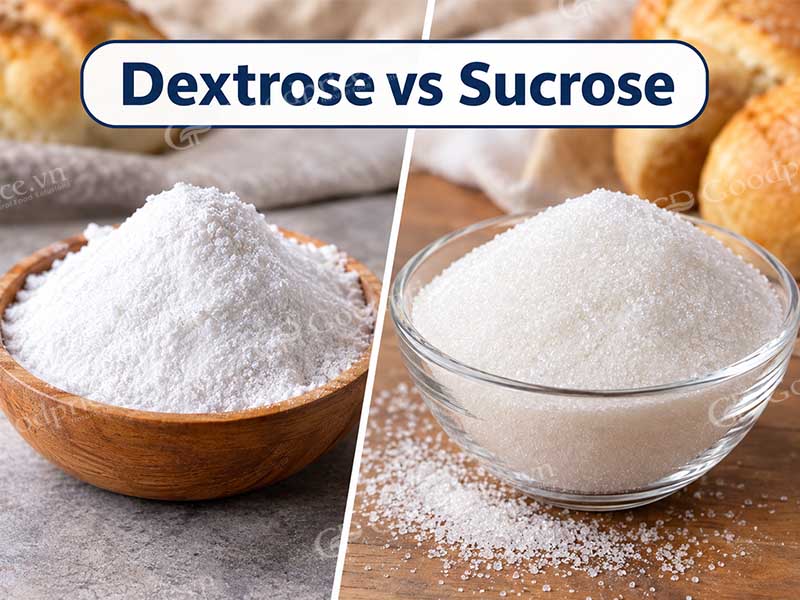
That difference leads to different results in production:
- Sweetness: Dextrose is about 70 - 75% as sweet as table sugar. Replacing part of the sucrose with dextrose lowers sweetness while keeping total solids.
- Color in baking: Dextrose is a reducing sugar, so it takes part in the Maillard reaction and helps crusts turn golden brown faster. Sucrose is not a reducing sugar, so it does not brown directly in this way.
- Ice cream softness: Dextrose lowers the freezing point almost twice as much as sucrose, so ice cream made with some dextrose is softer straight from the freezer.
- Fermentation: In yeast dough, yeast releases the enzyme invertase, which splits almost all the sucrose into glucose and fructose during mixing. As a result, the difference in fermentation speed between the two sugars in bread dough is usually small.
As for water content, dextrose monohydrate contains about 9% water of crystallization. When you replace sucrose with dextrose monohydrate by weight, account for this water in your formula.
How is glucose syrup different from dextrose?
Glucose syrup and dextrose are both made from starch, but they differ in how far the starch is broken down. The DE tells you how much of the starch has been converted into reducing sugars: dextrose is almost 100% glucose, while glucose syrup has a lower DE, with common grades such as 42 DE or 63 DE.
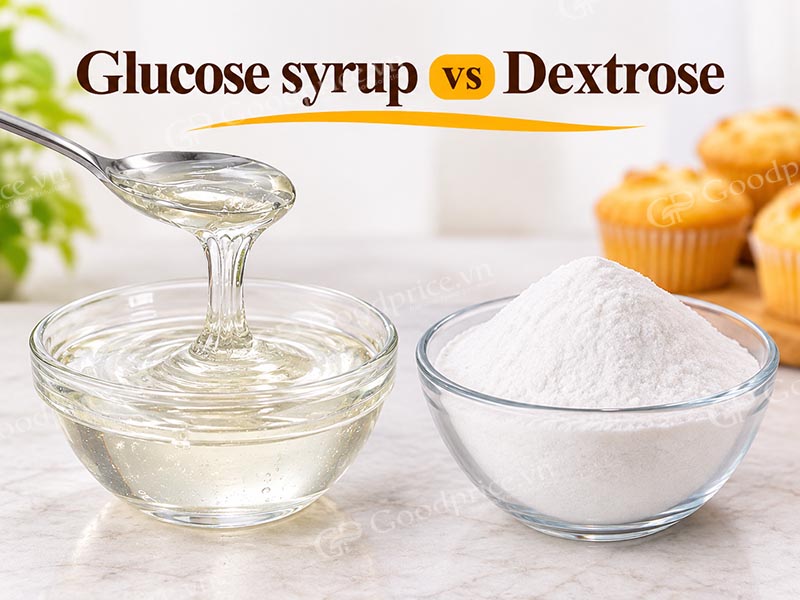
This gives glucose syrup its own properties:
- Liquid and viscous: Glucose syrup adds body and chewiness. The lower the DE, the thicker and less sweet the syrup.
- Prevents sugar crystallization: The longer sugar chains in the syrup stop sucrose crystals from coming together, so gummies and hard candy do not turn grainy.
- Moisture retention: Glucose syrup attracts and holds water, so baked goods stay soft longer and dry out more slowly.
- Color in baking: The syrup contains reducing sugars, so it also takes part in the Maillard reaction and helps baked goods brown more evenly than sucrose alone.
Dextrose, on the other hand, is a powder that is easier to weigh and blend with dry ingredients than a thick syrup.
Which sugar should you choose for each product?
Each sugar is strongest at one function, so the choice depends on the problem you need to solve in your product:
- Baked goods: Table sugar is the base sweetener. Add dextrose or glucose syrup when you need a better crust color, and glucose syrup when you need a soft crumb that stays moist longer.
- Hard candy and gummies: Sucrose combined with glucose syrup is the common approach, since the syrup stops sucrose from recrystallizing and adds chewiness.
- Ice cream and frozen desserts: Blend sucrose with dextrose or glucose syrup to adjust softness and sweetness. Dextrose makes ice cream noticeably softer, while glucose syrup adds body and chewiness.
- Powdered beverages: Powdered dextrose dissolves quickly and blends evenly with other dry ingredients.
- Liquid beverages and syrups: Glucose syrup adds body and a mild sweetness, which suits soft drinks and beverage syrups.
How to blend dextrose, sucrose and glucose syrup
In practice, manufacturers often blend sugars rather than use just one, to balance sweetness, texture and cost.
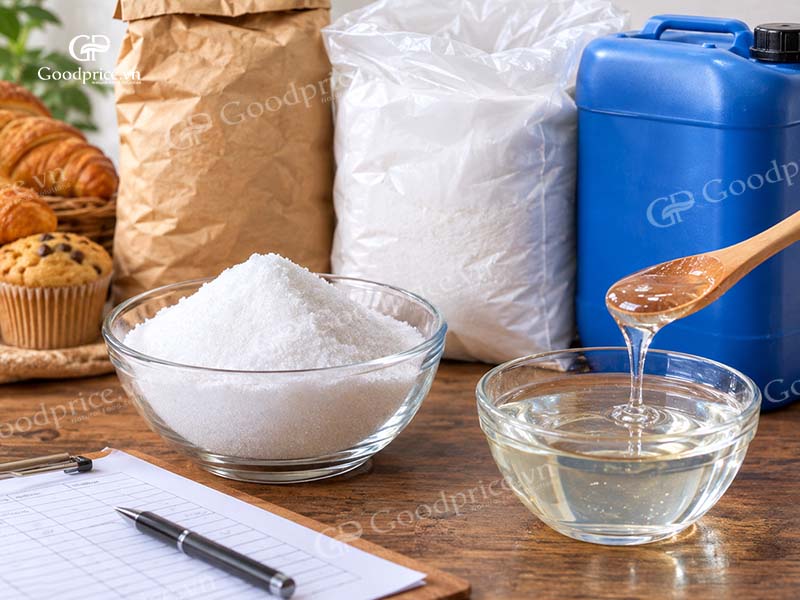
When blending, keep these points in mind:
- Work on a dry solids basis: Glucose syrup contains water. For example, 100kg of syrup with 82% solids carries only about 82kg of sugar. When you replace part of the sucrose with syrup, convert on a dry solids basis and reduce other water in the formula.
- Rebalance sweetness: Dextrose and glucose syrup are both less sweet than sucrose. To keep the same sweetness, you need more total sugar, or accept a less sweet product.
- Control color: More dextrose or a higher DE syrup makes baked or cooked products brown faster, so you may need to lower the temperature or time.
- Test small batches: Change one sugar at a time and record sweetness, color and softness of the finished product before scaling up.
What to check when buying dextrose and glucose syrup
Dextrose and glucose syrup both come with many specifications, so state your requirements clearly when you order:
- DE and solids: For glucose syrup, the DE and solids content determine sweetness, viscosity and color. Specify the DE range in your purchase order and ask the supplier to keep it consistent from batch to batch.
- Dextrose form: State whether you need dextrose monohydrate or anhydrous, since the two differ by about 9% water.
- COA for every batch: Moisture or solids, DE, purity and microbiological limits.
- Packaging and storage: Dextrose usually comes in 25kg bags and must be kept dry. Glucose syrup comes in pails or drums, which should be kept closed and away from heat.
- Labeling: Both dextrose and glucose syrup count toward total sugars on the nutrition label.
Conclusion
Dextrose, sucrose and glucose syrup do not fully replace each other. They complement each other. Sucrose is the base sweetener, dextrose lowers sweetness, adds color and softens ice cream, and glucose syrup prevents crystallization, holds moisture and adds chewiness. Goodprice directly imports dextrose monohydrate in 25kg bags and glucose syrup with a DE of 40 to 65, packed in pails and drums. Send us a quote request with your specifications and expected volume and we will help you choose the right grade.
Frequently asked questions
Is dextrose sweeter than sugar?
No. Dextrose is about 70 - 75% as sweet as table sugar, so it is often used to lower sweetness while keeping total solids.
Can you replace sugar with dextrose?
You can replace part of it. The product will be less sweet, brown faster in the oven and, for ice cream, be softer, so test a small batch first.
Is glucose syrup the same as dextrose?
No. Both are made from starch, but dextrose is almost pure glucose in powder form, while glucose syrup is a solution of several sugars with a lower DE.
Is dextrose healthier than sugar?
Not really. Dextrose and table sugar are both sugars and both count as free sugars when added to food.