



High-quality sweet potato starch: specs and quality grades
High-quality sweet potato starch is starch extracted from 100% sweet potato roots by grinding, removing the fiber, settling and drying. A good lot is white and meets measurable limits for moisture, impurities, viscosity and microbes.
This guide from the Goodprice Vietnam R&D team expands on our sweet potato starch overview and shows how manufacturers read a spec sheet and pick the values that matter for each product.
Granulated sweet potato starch, used as an ingredient in food production. Goodprice supplies food factories, bakeries and distributors in bulk, with advice on packing specifications, plus quotes based on order volume.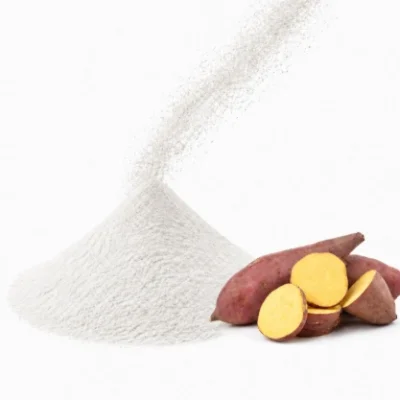
What is sweet potato starch, and how is it different from flour?
Sweet potato starch is the starch extracted from sweet potato roots by grinding, removing the fiber, settling and drying, so it is white and nearly fiber-free. Suppliers often confuse it with sweet potato flour, and ordering the wrong one breaks the formula.
- Native sweet potato starch: White and almost pure starch. It adds chew, clarity and binding to noodles, baked goods and processed foods.
- Sweet potato flour: Dried whole roots ground into powder. It keeps the root's color, fiber and flavor and is used mainly for color and taste.
How production affects sweet potato starch quality
Four production steps decide most of the quality of sweet potato starch:
- Washing and grinding: Leftover soil and peel end up as ash and dark specks.
- Fiber removal: Fiber that passes the screen raises sieve residue and roughens texture.
- Repeated washing and settling: Each wash removes more protein and color, which raises whiteness.
- Drying: Sets final moisture, which controls caking and mold in storage.
At the Goodprice Vietnam facility, native sweet potato starch goes through seven water-filtration stages and is dried to no more than 14% moisture before packing.
How do you evaluate high-quality sweet potato starch?
You evaluate sweet potato starch with three groups of specs: appearance, physicochemical values and safety limits. Each group has a measurable threshold instead of words like pure or clean.
Existing standards don't grade sweet potato starch by end use, and amylose content has long served as the main quality index. China's voluntary national standard GB/T 34321-2017 sorts edible sweet potato starch into three grades, shown below.
| Spec | Premium grade | First grade | Second grade |
|---|---|---|---|
| Moisture (%) | ≤ 14.0 | ≤ 15.0 | ≤ 15.0 |
| Ash (%, dry basis) | ≤ 0.30 | ≤ 0.35 | ≤ 0.40 |
| Protein (%, dry basis) | ≤ 0.10 | ≤ 0.20 | ≤ 0.30 |
| Specks (per cm²) | ≤ 3 | ≤ 7 | ≤ 9 |
| Passing 150 µm, 100 mesh (%) | ≥ 99.5 | ≥ 99.0 | ≥ 98.0 |
| Whiteness at 457 nm (%) | ≥ 82 | ≥ 78 | ≥ 76 |
| Peak viscosity, 6% dry basis (BU) | ≥ 500 | ≥ 500 | ≥ 500 |
| pH | 6.0–8.0 | 6.0–8.0 | 6.0–8.0 |
Source: GB/T 34321-2017, Table 2.
Appearance, whiteness and specks
Appearance is the first screen: good sweet potato starch is white, fine, free of off-odors and free of visible foreign matter. A yellow tint, a sour smell or lumps point to problems in washing, drying or storage.
Whiteness turns a visual check into a number, but the result depends on the test method. The grade table above uses blue-light reflectance at 457 nm. Some spec sheets list 90% or higher without naming a method, so you can't compare that figure with 82% and call one starch whiter.
Specks are counted per square centimeter of sample and show how much peel and grit survived washing. They stand out in clear glass noodles and light-colored baked goods, so noodle plants check this value closely.
Moisture, ash, protein and fineness
These four values show how well a lot was cleaned and dried:
- Moisture: Above 14% to 15%, starch tends to cake and mold in long storage, especially in warehouses without climate control.
- Ash and protein: These reflect minerals, grit and protein left after washing and settling. Lower numbers mean purer, brighter starch.
- Fineness: Measured as the share passing a 100-mesh screen or the residue left on it. Coarser starch than specified can leave baked goods gritty and noodles uneven.
When you read sweet potato starch specifications, check the unit behind each number. Ash of 0.3 means different things on an as-is basis and on a dry basis, so compare two sheets only when they use the same basis.
Viscosity and microbial safety
Viscosity shows how much body and chew the starch gives when cooked. You can only compare the number when both labs used the same concentration and instrument, which makes it the spec buyers most often compare wrongly between suppliers.
The usual unit is the Brabender unit (BU), measured at a fixed starch concentration, such as the 6% dry basis in the grade table. Viscosity relates to how chewy noodles are and how well they hold shape, so noodle plants should state the test conditions in their order specs.
Safety limits cover total plate count, yeasts, molds, E. coli, Salmonella, heavy metals and residual SO2. These aren't grading criteria but food safety limits that every lot must meet, whatever its price.
Which specs matter for noodles, coatings and baking?
The specs that matter depend on the end product. Glass noodles need viscosity and whiteness first, fried coatings need a coarse grain, and baked goods need fineness and color. The same lot can pass for cookies and fail for noodles, so high-quality sweet potato starch is defined by its application.
| Application | Specs to prioritize | Form |
|---|---|---|
| Glass noodles | Viscosity, whiteness, specks | Fine |
| Crispy fried coatings | Granule size, moisture | Coarse |
| Baked goods, desserts, jellies | Fineness, color, odor | Fine |
| Processed foods that need binding | Viscosity, microbes | Fine |
- Fine starch: Adds chew and binding. Korean dangmyeon, the noodles used in japchae, are made from sweet potato starch.
- Coarse starch: Larger granules fry into a bumpy, crunchy crust, the signature of Taiwanese fried chicken. Goodprice offers a separate coarse sweet potato starch for this use.
Sweet potato starch is a poor choice for clear sauces that need easy-to-adjust thickening, because its stickiness is strong and hard to control.
What should you ask a sweet potato starch supplier for?
Before you confirm a bulk order, ask for four things:
- A spec sheet with test methods: Every value should show its unit and method, especially whiteness and viscosity.
- Lot test results: These show how an actual lot compares with the spec sheet.
- A sample: Run it on your own line before a large order.
- Food safety documents: A food safety certificate and product declaration. Export lots also need PHYTO and C/O.
For example, the spec sheet for Goodprice native sweet potato starch covers 19 items.
| Spec | Value |
|---|---|
| Appearance | White powder |
| Starch | ≥ 85% |
| Moisture | 13.8–14% max |
| Protein | ≤ 0.35% |
| Whiteness | ≥ 92% |
| Viscosity | ≥ 400 BU |
| pH in solution | 6–7 |
| Fat | ≤ 0.1% |
| Cellulose | ≤ 0.1% |
| Residue on ignition | ≤ 0.25% |
| Acidity | ≤ 2 ml |
| SO2 | ≤ 10 ppm |
| Heavy metals | ≤ 20 ppm |
| Residue on 200 microns | ≤ 0.1% |
| Total plate count | ≤ 20,000/g |
| Yeasts | ≤ 500/g |
| Molds | ≤ 500/g |
| E. coli | Absent in 1 g |
| Salmonella | Absent in 10 g |
The starch is produced under ISO 22000:2018 and packed in 20 to 25 kg PP/PE bags.
Wholesale ordering for granulated sweet potato starch: Goodprice supports food factories, bakeries and distributors with advice on packing specifications, plus delivery planning and per-order quotes.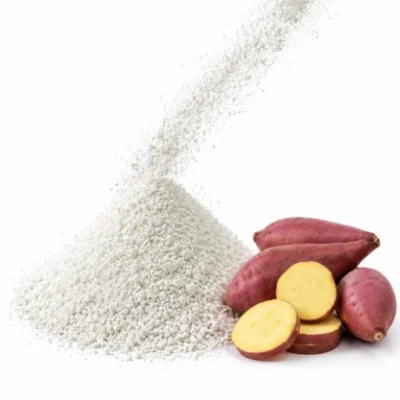
Sweet potato starch FAQ
Is there a difference between sweet potato starch and potato starch?
Yes. They come from different roots and behave differently when cooked, so you can't swap one for the other one to one.
Where can I buy sweet potato starch in bulk?
From starch manufacturers that publish a full spec sheet with test methods and send samples before you order, such as the Goodprice sweet potato starch line.
What is coarse sweet potato starch used for?
Mostly for crispy fried coatings. The larger granules create a bumpier, crunchier crust than fine starch, as in Taiwanese fried chicken.
How long does sweet potato starch last?
Goodprice native sweet potato starch has a 24-month shelf life from production when the bag stays sealed and is stored in a cool, dry place away from sunlight.
What moisture level should sweet potato starch have?
Premium grade under GB/T 34321 allows up to 14% moisture, and the first and second grades allow up to 15%.
Conclusion
High-quality sweet potato starch is the lot that meets the specs your product needs, with numbers and test methods you can check. Send your application and target volume to Goodprice Vietnam to request a sample and the full spec sheet.
Note: These thresholds are for reference. Check current regulations with your supplier's technical team before applying them.