



How to Make Vietnamese Rice Rolls Using a Non-Stick Pan for Food Businesses
Making Vietnamese rice rolls with a non-stick pan is increasingly popular among food vendors because it does not require specialized steaming equipment while still producing thin, soft, and consistent rolls. This article shares an easy-to-apply process along with guidance on selecting suitable rice flour for commercial use.
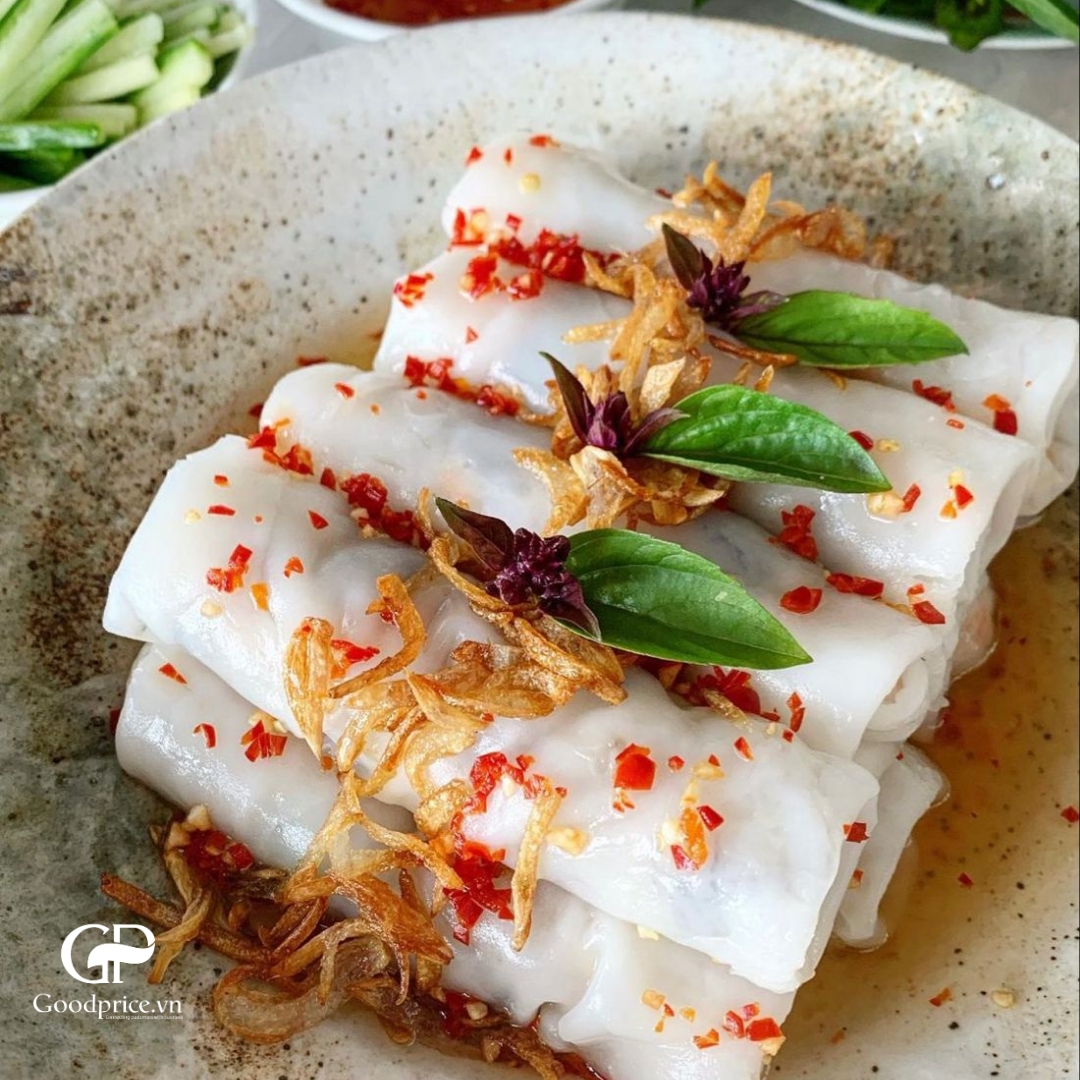
Is making rice rolls with a non-stick pan suitable for selling?
This method is well suited for small eateries, newly opened shops, and commercial kitchens looking to optimize costs. When the batter is mixed correctly, the rolls achieve a light chewiness, resist tearing, and are easy to roll.
The non-stick pan method is highly rated for its low initial investment, simple operation, and easy quality control. With a good non-stick pan and stable flour quality, businesses can operate smoothly even during peak hours.
Practical benefits of using a non-stick pan in food businesses
This section explains why many shops are switching to this method.
Cost-effective equipment
- No need for traditional steamers.
- Ideal for small-scale shops or take-away models.
Easy process standardization
- Simple steps with less reliance on individual skill.
- New staff can learn quickly, reducing product defects.
Flexible business models
- Suitable for morning sales, online orders, and canteens.
- Easy to scale up by adding more pans during busy periods.
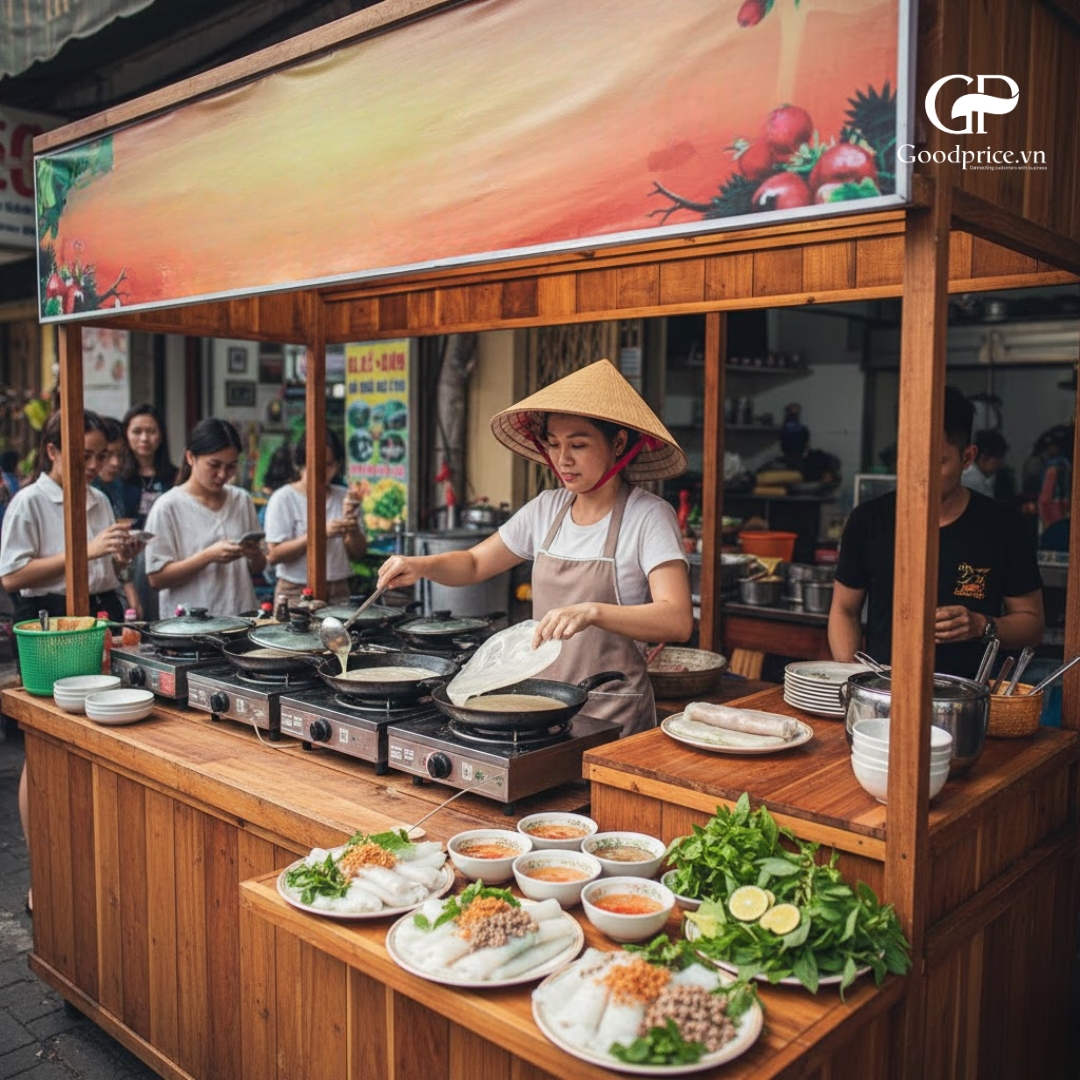
Overall, this is a practical solution for shops seeking efficiency and consistency.
Ingredients needed for consistent quality
To achieve high-quality rice rolls using a non-stick pan, ingredients must be easy to mix and consistent.
Basic ingredients include:
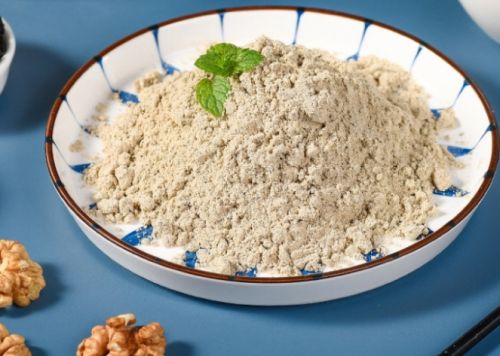
- Stable-quality rice flour for rice rolls.
- A small amount of tapioca starch for light elasticity.
- Filtered water, salt, and cooking oil.
Choosing the right flour helps reduce waste and maintain long-term quality.
How to mix rice roll batter for food businesses
This step determines the thinness and softness of the rolls. Below is an easy checklist.
Simple batter-mixing checklist
- Suggested ratio: 1 part rice flour : 0.1 part tapioca starch : 2 - 2.2 parts water.
- Mix well and let the batter rest for 20–30 minutes.
- Stir again before cooking to prevent settling.
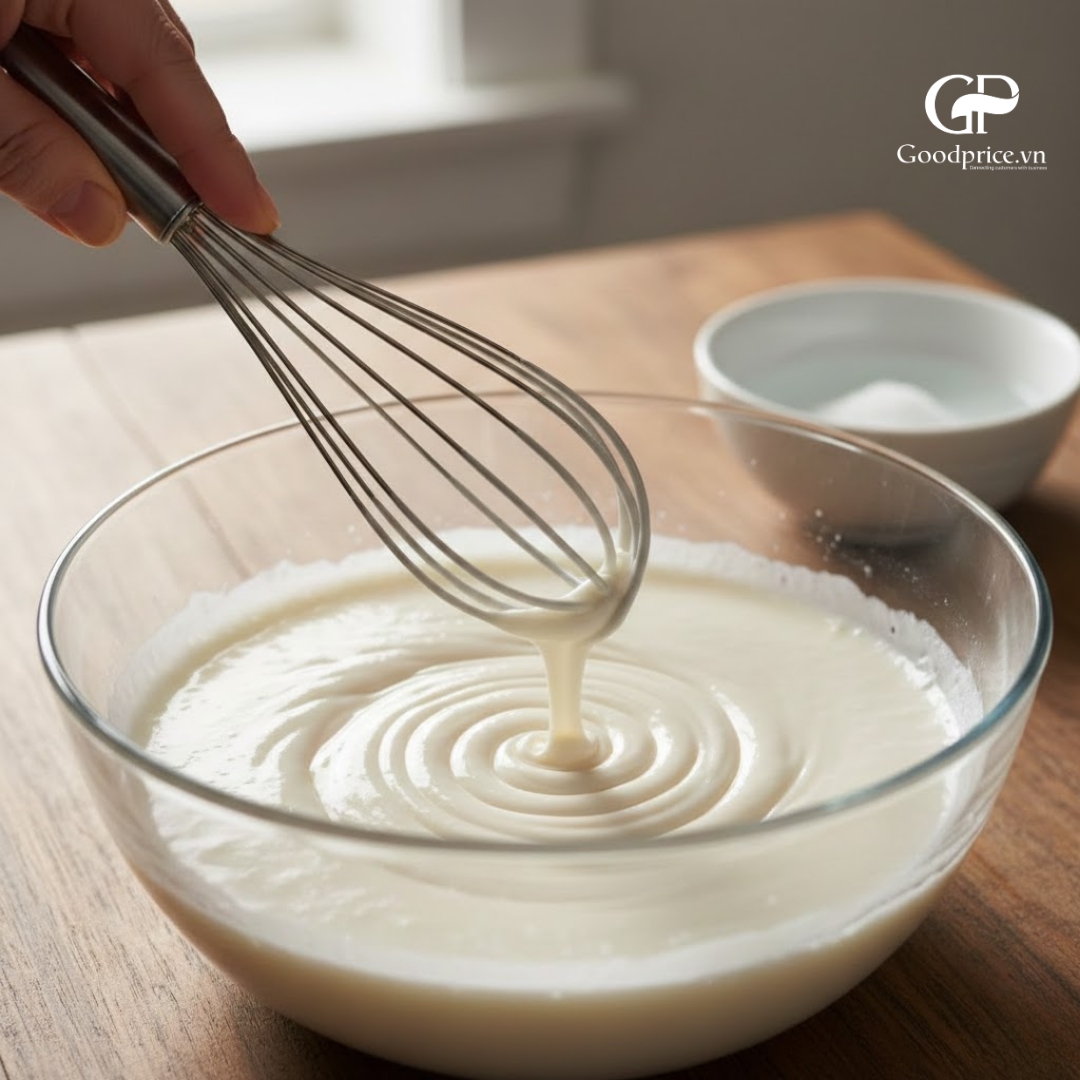
Proper batter mixing ensures thin, smooth rolls with minimal tearing.
Rice roll cooking process using a non-stick pan
Heat control is a key factor in this method.
Steps
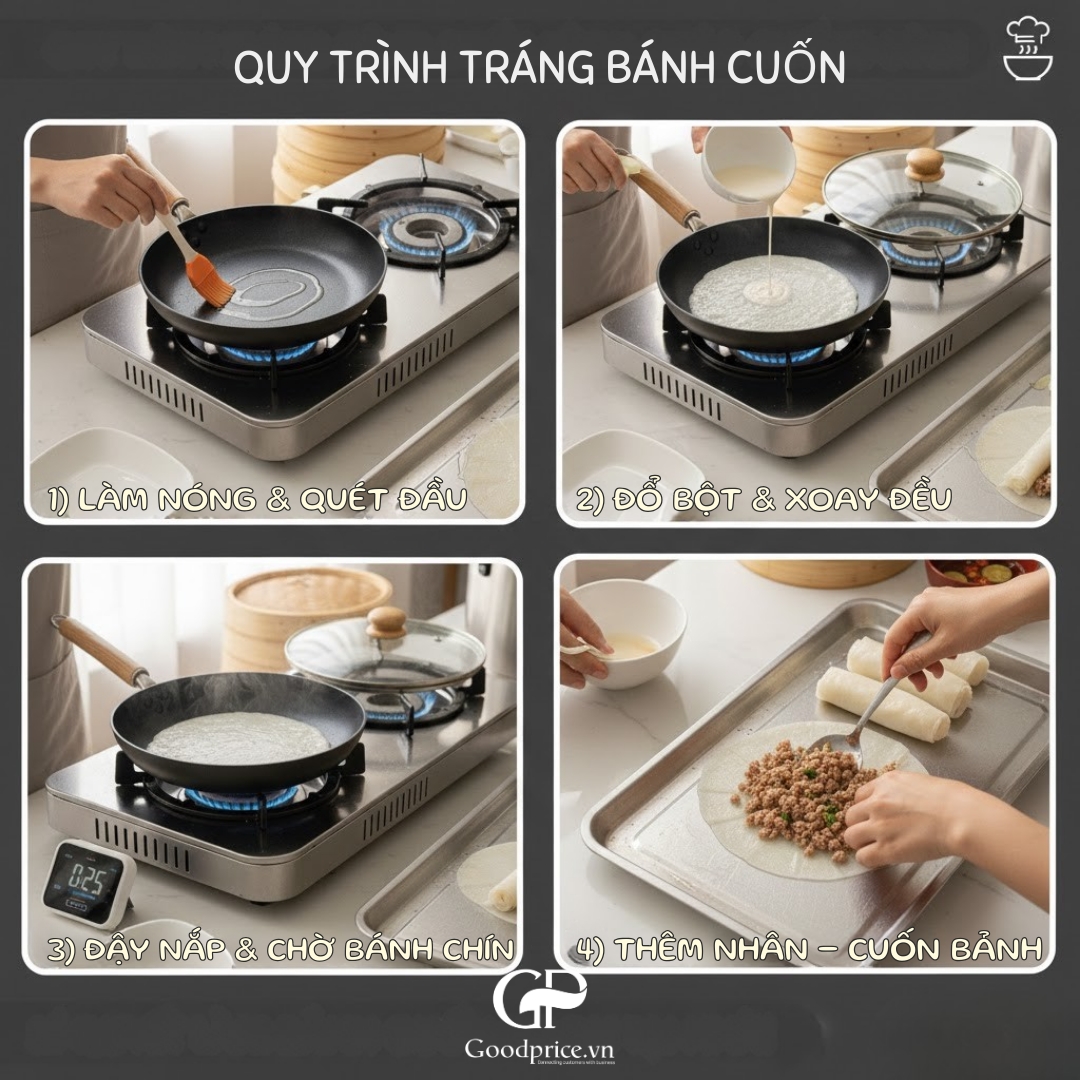
- Heat the pan and brush with a thin layer of oil.
- Pour in the batter and swirl to spread evenly.
- Cover and cook for about 20–30 seconds until translucent.
Correct technique ensures even cooking and easy removal.
Rolling and serving large volumes
- Add the filling while the sheet is still warm for easier rolling.
- Arrange finished rolls on an oiled tray to prevent sticking.
- Keep the rolls in insulated containers during busy service hours.
- This approach allows fast service while keeping the rolls visually appealing.
One type of flour, multiple applications
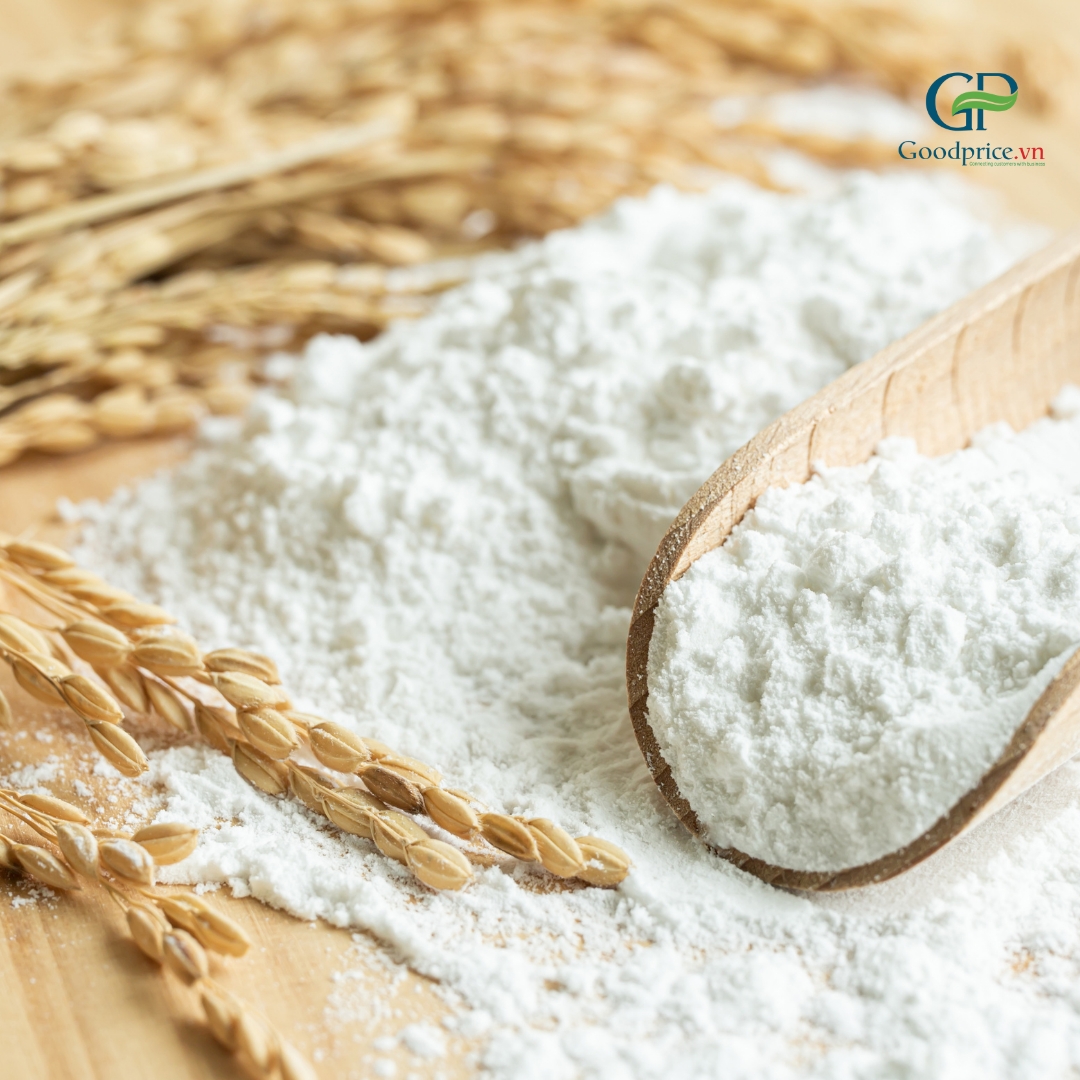
Using one type of flour for multiple dishes is a major advantage of Goodprice rice flour in daily kitchen operations. In addition to rice rolls and steamed rice sheets, the flour is suitable for traditional dishes such as hot rice cake, Vietnamese pancakes, mini savory pancakes, and steamed honeycomb cake.
In summary, making Vietnamese rice rolls with a non-stick pan is a smart option for food businesses seeking cost efficiency and simple operations.
Combining this method with high-quality rice flour for foodservice from Goodprice helps shops maintain attractive products and consistent daily sales. Learn more about ingredients and B2B policies at Goodprice.
CÔNG TY TNHH TM DV GOODPRICE VIỆT NAM
Email: [email protected]
Facebook: Here
Tik Tok: Here
Phone: 0906368199 - 0916112833
Hotline: 1900636299