



Granulated Sweet Potato Starch – The Secret to Longer-Lasting Crisp Fried Dishes
Granulated sweet potato starch fries into a craggy, crunchy crust because its large granules cling to the food and puff into crisp bits in hot oil. That crust can still go soft in a takeout box or shed granules into the fryer if one step is off.
This guide covers why it crisps, how to fry with it, and how to adjust and troubleshoot by dish. Goodprice Vietnam manufactures granulated sweet potato starch for restaurant kitchens and food processors, part of its sweet potato starch range.
Granulated sweet potato starch, used as an ingredient in food production. Goodprice supplies food factories, bakeries and distributors in bulk, with advice on packing specifications, plus quotes based on order volume.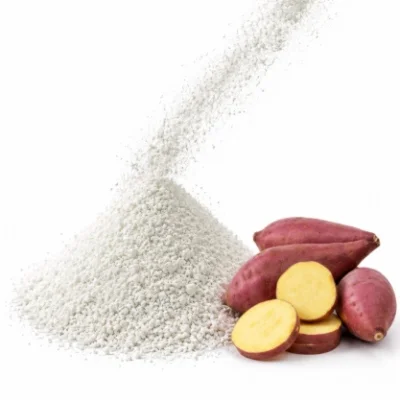
What is Granulated sweet potato starch?
Granulated sweet potato starch is starch extracted from sweet potatoes and left as irregular granules instead of being milled into a fine powder. Packages may call it thick or granulated sweet potato starch. Granule size decides what each form does best:
- Fine sweet potato starch: The standard sweet potato starch, used for glass noodles, marinating meat and chewy desserts.
- Granulated sweet potato starch: Used as a frying coating, where the large granules build a rough, crunchy surface.
It isn't potato starch, which fries into a lighter, tighter shell, or sweet potato flour, which is ground from the whole root. How it's made is covered in quality grain sweet potato starch.
Why does Granulated sweet potato starch fry up so crisp?
Granulated sweet potato starch fries up crisp because its large granules puff and harden in hot oil, turning the surface into a craggy crust of separate crunchy bits. Three traits shape that crust:
- Craggy surface: Uneven granules leave ridges and gaps, so the crust shatters instead of bending.
- No gluten: Starch doesn't build the stretchy network that wheat flour does, so the coating stays light and brittle.
- Less oil than wheat flour in a lab test: Chicken nuggets coated in sweet potato starch batter held 13.09% oil, below wheat flour, cassava and corn starch batters. The test used fine starch in a wet batter.
Crispness fades as moisture from the core or the air reaches the crust, so frying and holding matter as much as the starch.
How do you fry with Granulated sweet potato starch?
Granulated sweet potato starch frying comes down to three steps: a tacky surface for the dredge, the right oil temperature with a second fry, and keeping the crust dry once it leaves the oil.
Prep the surface and dredge
The food should be slightly damp when it meets the starch, so the granules have something to grip. With fried chicken, the marinade does that job, so you can dredge straight from the bowl without mixing a batter. Pick the method by ingredient:
- Dry dredge: Best for marinated chicken, pork and seafood. Drained but still tacky meat holds an even layer.
- Thin batter, then Granulated starch: Suits vegetables and other dry surfaces. Test the batter's thickness on a few small batches first.
Press each piece into the starch so the larger granules seat firmly, rather than just tossing to coat. Then rest the coated pieces for a few minutes. The starch absorbs surface moisture and clings better, so less of it falls off in the fryer.
Oil temperature and the double fry
A double fry gives a firmer, crunchier crust than a single fry: the first round cooks the food, the second dries the coating. Treat these ranges as starting points and test them on your own pieces:
- First fry: Around 325 to 350°F (163 to 177°C) until the coating is pale gold and the meat is cooked through. Rest the pieces on a rack.
- Second fry: Raise the oil to around 350 to 375°F (177 to 190°C) and fry for 1 to 2 minutes to dry and color the crust.
A single fry at about 375°F (190°C) for 3 to 5 minutes works for small pieces, but the crust softens sooner.
Fry in small batches so the oil holds its heat, and skim loose granules between batches before they burn and darken the oil.
Keep the coating crisp after frying
A coating goes soft when steam leaving the hot interior has nowhere to go, so handling after the fryer matters as much as the fry. Three habits keep the crust dry longer:
- Drain on a wire rack: Air reaches the underside, so the crust doesn't sit in oil or condensation.
- Don't stack or cover hot pieces: Stacked pieces steam each other, and a lid traps that moisture against the crust.
- Cool before boxing takeout: A few minutes on the rack before packing means less steam gets sealed in the container.
Coated frozen products also go through freezing, thawing and refrying. We haven't found published data on Granulated sweet potato starch through that cycle, so test it on your line first.
Which fried foods suit Granulated sweet potato starch?
Granulated sweet potato starch suits dishes that need a rough, crunchy crust, from fried chicken to crispy pork, seafood and vegetables.
| Food | How to coat | Note |
|---|---|---|
| Fried chicken, popcorn chicken | Dry dredge after marinating, press and rest | Double fry for takeout |
| Crispy pork | Dry dredge, or thin batter then Granulated starch | Cut evenly so pieces cook together |
| Shrimp, squid | Blot excess water, then dry dredge | Lower gently, wet seafood spatters |
| Vegetables, sweet potato | Thin batter, then Granulated starch | Cut evenly and pat dry first |
| Coated frozen products | Depends on your formula | Test the crust after freezing and refrying |
Common Granulated sweet potato starch frying problems
Most Granulated sweet potato starch frying problems trace back to the dredge and the oil temperature, not the starch itself.
| Problem | Likely cause | Fix |
|---|---|---|
| Granules fall off in the oil | Surface too dry, light dredge, no rest | Keep it tacky, press, rest a few minutes |
| Coating softens fast | Single fry, stacking or covering while hot | Double fry, drain on a rack |
| Oil darkens quickly | Loose granules burning in the fryer | Skim between batches |
| Pale coating | Starch browns less than wheat flour | Extend the second fry, skip added color |
| Brown outside, raw inside | First fry too hot for the piece size | Lower the first-fry temperature |
Where can you source Granulated sweet potato starch in bulk?
Buy Granulated sweet potato starch from a direct manufacturer that sends samples, because granule size drives the crust and must match lot to lot. Check three things:
- Samples before ordering: Fry them in your own dish.
- Consistent supply: The same Granulatedness and moisture in every lot.
- Clear specifications: The parameters that define high-quality sweet potato starch, plus shelf life, in writing.
Goodprice Vietnam manufactures granulated sweet potato starch with a 10 kg minimum order and capacity of 100 tonnes a month.
Granulated sweet potato starch, used as an ingredient in food production. Goodprice supplies food factories, bakeries and distributors in bulk, with advice on packing specifications, plus quotes based on order volume.
Granulated sweet potato starch frying FAQ
Which is better for frying, potato starch or sweet potato starch?
It depends on the crust you want. Granulated sweet potato starch gives a craggy crust, while potato starch tends to fry into a lighter, tighter shell.
What type of starch is best for frying?
No single starch wins for every dish. In a lab test on chicken nuggets, sweet potato starch batter held less oil than wheat flour, cassava or corn starch batters.
Can you use fine sweet potato starch instead of Granulated?
Yes, but the crust will be smoother. Some cooks mist fine starch with water so it clumps into small beads before dredging.
Do you have to double fry with Granulated sweet potato starch?
No, but it helps for food that has to wait or travel. A single-fried crust softens sooner, while a second fry dries and firms it.
What else is sweet potato starch used for?
Fine sweet potato starch goes into glass noodles, marinades for stir-fried meat and chewy desserts. The Granulated form is best kept for coatings.
Conclusion
Granulated sweet potato starch frying gives a craggy crust thanks to the large granules, while how long it stays crisp depends on the dredge, the oil temperature and handling after the fryer. To test it on your menu, request a quote from Goodprice Vietnam with your application and expected volume.
Note: Temperatures and times here are reference points, so test them on your own equipment first.