

What Is the Difference Between Vietnamese Purple Yam Powder and Philippine Purple Yam Powder?
What Is the Difference Between Vietnamese Purple Yam Powder and Philippine Purple Yam Powder?
In recent years, purple yam powder has become increasingly popular in the food industry thanks to its attractive natural color and distinctive earthy-sweet flavor. Alongside products made from locally sourced Vietnamese purple yams, many consumers have also become familiar with Philippine purple yam powder, commonly known as Ube powder, through vibrant purple desserts, baked goods, and beverages.
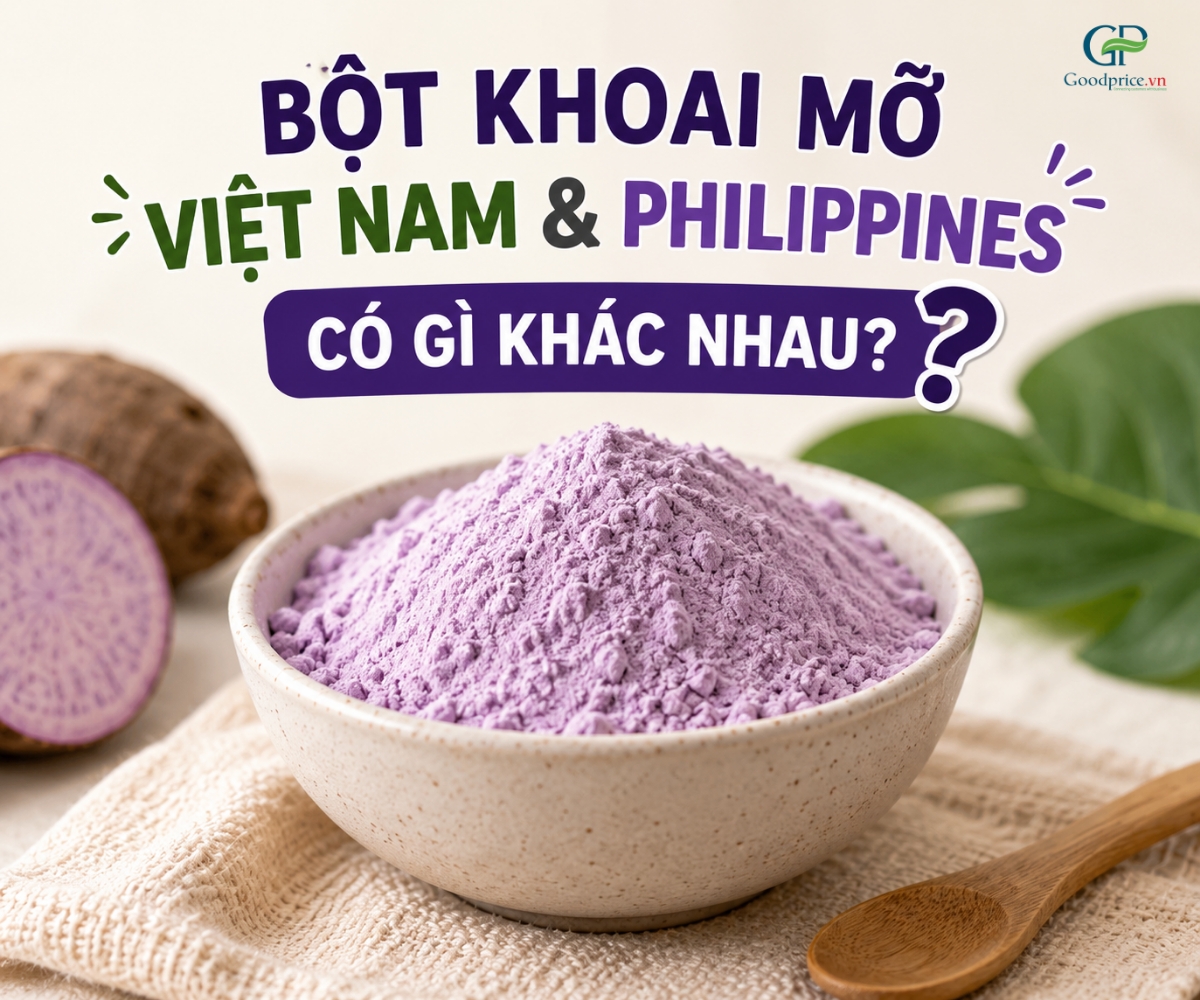
As a result, many people wonder: What is the difference between Vietnamese purple yam powder and Philippine purple yam powder? Which one is better? Is Philippine Ube powder really superior as many people believe?
In reality, while there are some differences in color and raw material characteristics, these two types of powder share far more similarities than most people realize. Let's explore the details with Goodprice in this article.
What Is Purple Yam Powder?
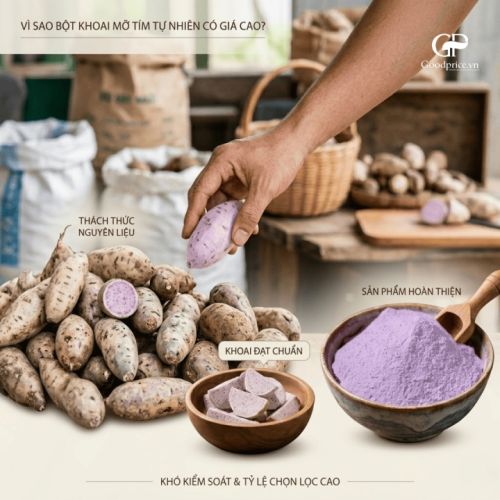
Purple yam powder is produced from fresh purple yams through a process of cleaning, slicing, drying, and fine grinding. It is widely used in the food industry due to its natural coloring properties, pleasant aroma, and versatile applications.
Today, purple yam powder is commonly used in:
- Bakery products
- Beverages
- Ice cream
- Fillings and confectionery
- Nutritional foods
- Various processed food products
How Are Vietnamese and Philippine Purple Yam Powders Different?
Although commonly referred to as Vietnamese purple yam or Philippine Ube, most raw materials used to produce both powders belong to the species Dioscorea alata (purple yam).
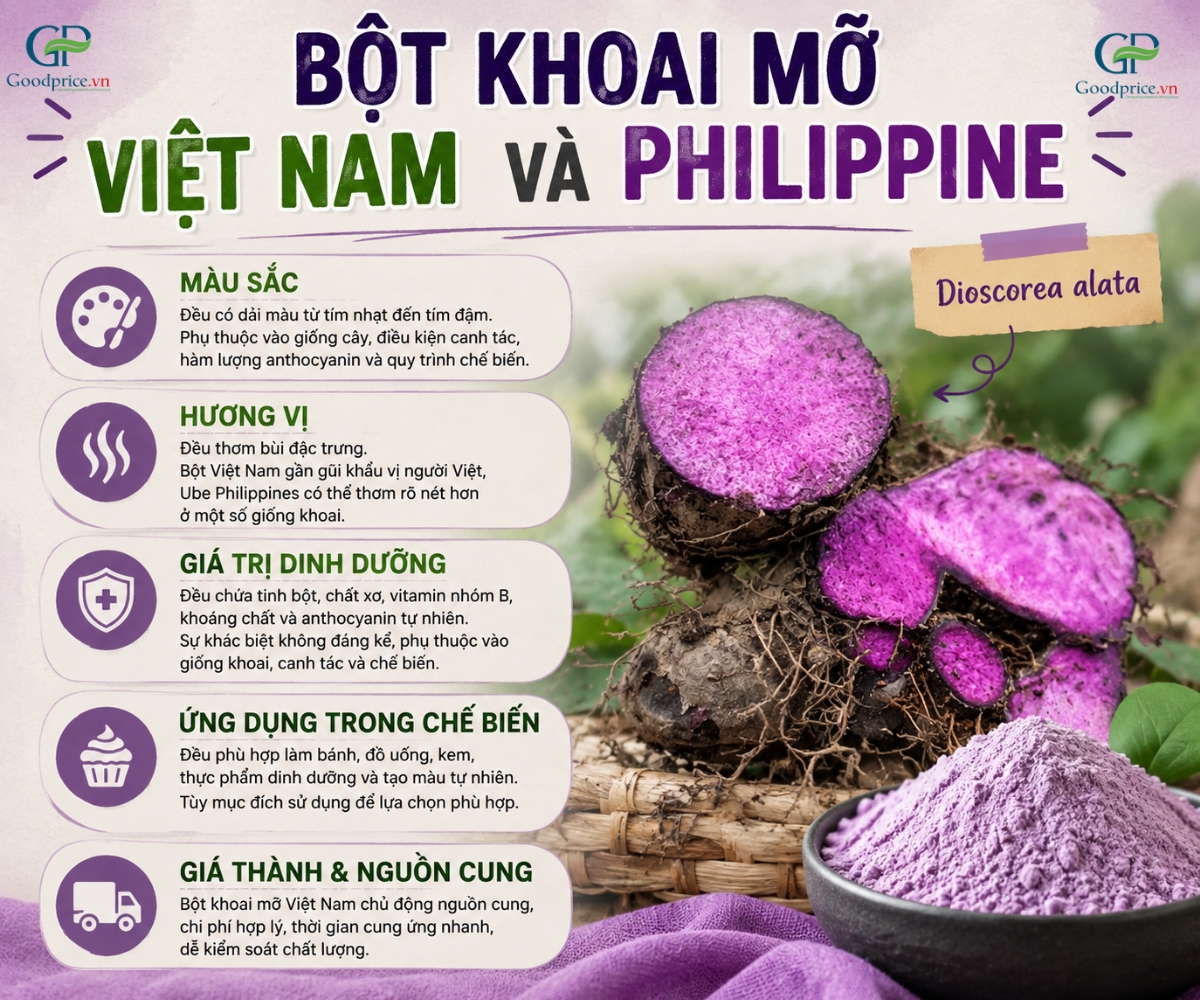
Therefore, they are not fundamentally different crops. Instead, they are varieties or cultivars grown under different environmental and agricultural conditions. The main differences can be seen in the following aspects.
Color
Color is the most noticeable difference when comparing Vietnamese purple yam powder and Philippine purple yam powder.
Many people assume that Philippine purple yam powder always has a deeper purple color because it is produced from the famous Ube variety. However, both Vietnam and the Philippines cultivate multiple purple yam varieties that range from light purple to deep purple in color. The color of the yam depends on the cultivar, growing conditions, and the natural anthocyanin content of the tuber.
For commercial purple yam powder production, manufacturers typically select yams with deeper purple pigmentation and consistent quality to achieve a more appealing final product. As a result, when high-quality raw materials are used, the color difference between Vietnamese purple yam powder and Philippine purple yam powder is often much smaller than many people expect.
In fact, the final color of the powder is influenced not only by the origin of the raw material but also by the production process, particularly the drying and milling technologies used. Therefore, a high-quality Vietnamese purple yam powder can achieve a rich purple color and consistency comparable to products made from Philippine purple yams.
Flavor
The flavor differences between the two powders are relatively minor.
Vietnamese purple yam powder typically offers a naturally earthy, nutty aroma that is familiar to local consumers.
Meanwhile, Philippine Ube powder may exhibit a slightly more pronounced fragrance depending on the specific variety used.
However, when incorporated into recipes such as cakes, ice cream, or beverages, most consumers would find it difficult to distinguish between the two without a direct side-by-side comparison.
Nutritional Value
One common misconception is that Philippine purple yam powder is nutritionally superior.
In reality, both products contain:
- Natural carbohydrates
- Dietary fiber
- B-complex vitamins
- Essential minerals
- Anthocyanins, the natural pigments responsible for their purple color
The nutritional differences between the two are generally minimal. Actual nutritional content depends more on the yam variety, cultivation practices, and processing methods used by individual manufacturers.
Applications in Food Processing
In terms of functionality, Vietnamese and Philippine purple yam powders are remarkably similar.
Both can be used for:
- Baking
- Beverage formulations
- Ice cream production
- Nutritional food products
- Natural food coloring
Depending on the intended application, manufacturers may select one or the other based on desired color intensity, flavor profile, or supply requirements.
Cost and Supply Availability
This is one area where a more noticeable difference exists.
Purple yam powder produced from locally sourced Vietnamese raw materials often offers advantages such as:
- Stable supply availability
- Lower transportation costs
- Faster delivery times
- Easier quality control of raw materials
Imported ingredients, on the other hand, may be subject to fluctuations in logistics costs and international supply conditions.
>>> Which Purple Yam Is More Suitable for Purple Yam Powder Production?
Is Vietnamese Purple Yam Powder Inferior to Philippine Purple Yam Powder?
In reality, the perception that "Philippine purple yam powder is better" largely stems from the popularity of Ube products and their strong international marketing presence. However, powder quality cannot be judged solely by color.
More important factors include:
-
Raw material quality
-
Starch content
-
Powder fineness
-
Solubility
-
Color stability
-
Manufacturing and quality control processes
As a result, a purple yam powder produced from high-quality Vietnamese raw materials can fully meet the requirements of the food and beverage industry.
Which Purple Yam Powder Should You Choose?
Rather than focusing on which option is "better," users should choose based on their specific application needs.
If you require a stable ingredient with natural color, competitive pricing, and versatility across a wide range of food formulations, Vietnamese purple yam powder is an excellent option.
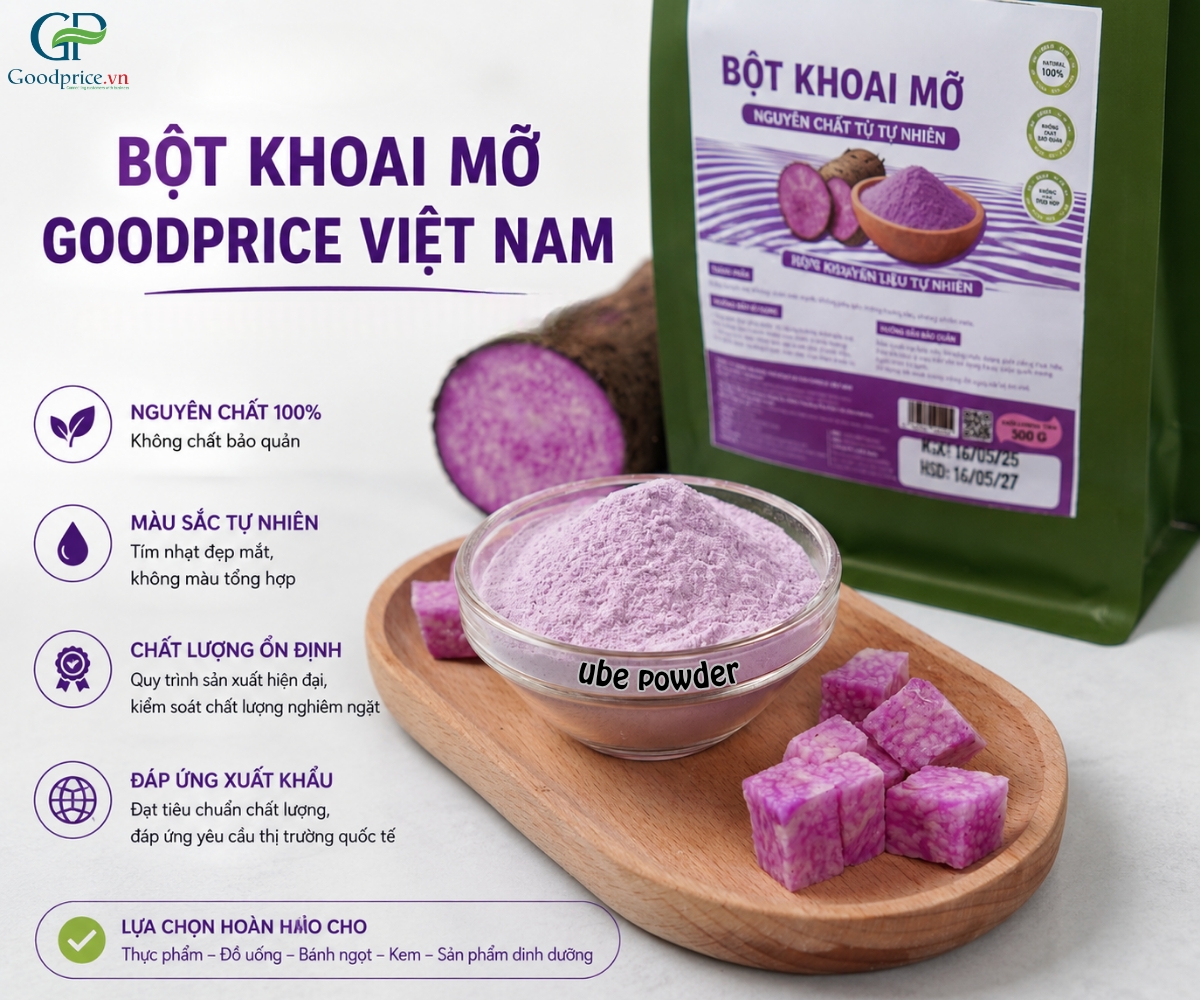
Today, many Vietnamese manufacturers have invested heavily in developing high-quality purple yam powder products to meet the growing demands of the food and beverage sector. Among them, Goodprice Vietnam's purple yam powder has become a preferred choice for many businesses due to its versatility in bakery products, beverages, ice cream, and processed foods.
The product is developed with a focus on purity and consistency, helping manufacturers achieve reliable results in production.
When selecting a supplier, buyers should prioritize companies that provide transparent information regarding raw material sourcing, production processes, and quality standards rather than focusing solely on the origin of the yam variety.
Conclusion
Although Vietnamese purple yam powder and Philippine purple yam powder are often viewed as distinct ingredients, both are primarily produced from varieties of Dioscorea alata. When sourced from high-quality yams and processed using appropriate technologies, Vietnamese purple yam powder can deliver color, flavor, and functional performance comparable to Philippine purple yam powder across a wide range of food and beverage applications.
Therefore, rather than judging a product based solely on the origin of the yam variety, buyers should focus on factors such as raw material quality, manufacturing standards, and product consistency. These are the elements that truly determine the value and performance of purple yam powder in commercial food applications.
This is also the approach that Goodprice Vietnam follows in developing purple yam powder solutions for the food and beverage industry.
GOODPRICE VIETNAM CO.,LTD
Email: [email protected]
Facebook: Here
Tik Tok: Here
Phone: 0906368199 - 0916112833
Hotline: 1900636299
The article is of interest.
Trị mụn bằng lá tía tô có thực sự hiệu quả? Mua bột tía tô ở đâu?
Pure celery powder meets export standards
Hướng dẫn cách làm bột gạo lứt đơn giản tại nhà
What positive effects does Gotu Kola Powder have on human health?
Mint flavor helps create delicious natural food flavor