



What Is Ube Powder Used For? Most Popular Ways to Use It
Ube powder is dried, ground purple yam used mainly as a natural purple color and in lattes, milk tea, cakes, fillings, ice cream, boba and Filipino desserts like halaya. It keeps the yam's starchy body and mellow, vanilla-like flavor, so it can stand in for fresh ube in most recipes.
This guide covers what each use asks of the powder, how to use ube powder in each case and how to keep the color.
Goodprice manufactures and supplies ube (purple yam) powder in bulk to food factories, OEM brands and importers. Direct control of raw-material sourcing, flexible MOQ, and OEM production to your own formula and packing specification.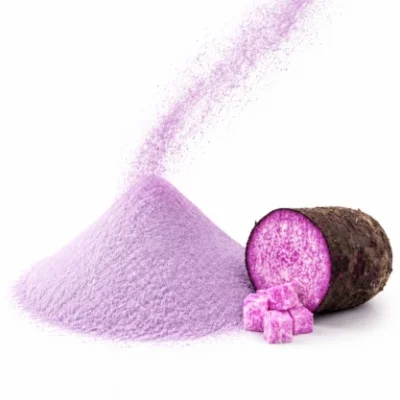
What is ube powder?
Ube powder is purple yam that has been dried and ground into a fine powder, and many brands cook the yam before drying it.
Ube is Dioscorea alata, a yam first grown in Southeast Asia. Filipinos call it ube, and in Vietnam the same species is known as khoai mỡ, so you will also see it sold as purple yam powder.
Thanks to the ube trend in cafés and bakeries, several purple ingredients now share the shelf, so it pays to know what you are buying:
- Taro powder: Made from a different root with mostly white, purple-flecked flesh, so it is much paler than ube.
- Purple sweet potato powder: A sweet potato, not a yam, so it tastes sweeter and has a drier texture than ube.
- Ube flavored powder or extract: Flavoring and color, usually with no yam body, so it cannot replace real powder in fillings.
Why ube powder works in so many recipes
Ube powder uses are this broad because one ingredient brings three things at once:
- Natural color: Anthocyanin pigments give batters, drinks and fillings a violet tone without synthetic dye.
- Flavor: A mild sweetness with notes of vanilla, coconut and pistachio that pairs well with milk and white chocolate.
- Body: The yam's starch thickens fillings, ice cream bases and drinks.
What is ube powder used for?
Ube powder is used for Filipino classics like halaya, cakes, cookies and fillings, lattes and milk tea, ice cream and boba, and as a natural purple color in processed foods.
As for how to use ube powder, there are three ways: rehydrate it into a paste, dry-mix it into flour or dissolve it into drinks. The table below shows the main ube powder uses and how the powder goes into each one.
| Use | Examples | What the powder does | How it goes in |
|---|---|---|---|
| Filipino desserts | Ube halaya, halo-halo, ube rolls | Base, color, flavor | Rehydrated paste |
| Baked goods and fillings | Cakes, cookies, bread, mooncake filling | Color and flavor in dough, body in filling | Dry mix for dough, paste for filling |
| Drinks | Lattes, milk tea, smoothies | Color, flavor, body | Dissolved or blended |
| Frozen and chilled desserts | Ice cream, boba, jellies | Color, flavor, thickness | Paste, or kneaded with tapioca starch |
| Color and processed foods | Steamed buns, candy, noodles, premixes | Color | Dry mix |

Ube halaya and Filipino desserts
Ube halaya, a thick purple yam jam, is the dish most Filipino ube recipes start from. Traditional halaya means peeling, boiling and mashing fresh ube, then stirring it for a long time with butter, sugar and coconut milk. Rehydrated powder replaces the mashed yam and cuts out the prep.
To make halaya from powder, stir it into hot water or milk and cook over low heat until it loses its grainy texture. Ratios start around 1 part powder to 1.5 parts liquid, and some packages call for up to 1 to 4.
Then stir in coconut cream, evaporated milk, condensed milk, sugar and butter over low to medium heat until it holds its shape.
Halaya is also a building block for other desserts. It tops halo-halo, the layered shaved ice dessert, and fills ube rolls and breads.
Cakes, cookies, bread and fillings
For cakes, muffins and pancakes, sift ube powder into the flour before adding wet ingredients so the color spreads evenly. A standard 8-inch cake usually needs about 2 to 3 tablespoons. For bread, you can swap part of the flour for ube powder to get a purple crumb.

The powder is slightly grainy, which suits chewy cookies and fudgy brownies. Mixing it into a paste with a little warm milk first gives a softer texture in cookie dough and keeps frostings smooth.
Fillings are the other big use. Cooked with sugar and fat, rehydrated powder turns into a smooth paste for ube mooncake filling, buns and rolls. At bakery scale, the hard part is keeping the filling from separating oil or weeping over its shelf life.
Lattes, milk tea and other drinks
Ube lattes, ube milk tea, milkshakes and smoothies are the most common drinks made with ube powder. Whisk 1 to 2 teaspoons into a splash of hot water or warm milk first so it does not clump, then pour in the cold or hot milk.
Real ube powder in drinks gives more body than a flavored syrup because it carries the yam's starch, so the drink feels creamier. Ube also mellows the grassy edge of matcha, which makes ube matcha lattes a popular pairing.
Smoothies need no prep: add about 1 tablespoon per cup straight to the blender. Major coffee chains, including Starbucks and Costa Coffee, have put ube drinks on their menus.
Ice cream, boba and chilled desserts
For ice cream and pudding, rehydrate the powder first and stir the paste into the base. A no-churn version reconstitutes the powder at about 1 part powder to 1.5 parts hot water, then folds it into condensed milk and whipped cream. For store-bought vanilla ice cream, about 2 tablespoons of reconstituted powder colors a quart.
Ube boba is made by kneading ube powder with tapioca starch, rolling it into pearls and boiling them like regular tapioca pearls. The starch gives the chew and the ube gives the color.
Jellies follow the same idea. Powder mixed with water and coconut milk sets with agar into purple cubes for halo-halo or milk tea. Chilled desserts show the brightest purple because they skip long, hot cooking.
Natural color and processed foods
Ube powder works as a natural purple color for steamed buns, layered cakes, candy and noodles. Its color is softer than synthetic dye and lighter than ube extract, so it suits products aiming for a short ingredient list more than products that need a deep, uniform purple.
In food manufacturing, ube powder goes into baking premixes, drink mixes, ready-to-drink beverages and other processed foods. In these products the powder adds color and real yam flavor at once, which can shorten the flavoring list. The violet tone also helps ube products stand out on shelves and on social media.
The color also shifts with the recipe. Manufacturers should test it in their actual product base, at their actual processing temperature, before locking in a dose for a full batch.
Ube powder nutrition facts
Pure ube powder, also sold as purple yam powder, is mostly starch, with smaller amounts of protein, minerals, fiber and the anthocyanin pigments behind its color. The table below comes from a study on purple yam flour in Thailand.
| Component | Per 100 g purple yam flour |
|---|---|
| Carbohydrate (mostly starch) | 76.52 g |
| Moisture | 9.52 g |
| Protein | 8.74 g |
| Minerals (ash) | 3.02 g |
| Crude fiber | 2.23 g |
| Fat | 0.01 g |
| Anthocyanins | 16 mg |
Source: Singthong, Suranaree Journal of Science and Technology, 2018.

Fresh yam holds far more water. USDA lists 100 g of raw yam (Dioscorea) at about 118 kcal, 27.9 g carbohydrate, 4.1 g fiber, 816 mg potassium and 17.1 mg vitamin C.
Numbers vary by variety, harvest age and drying method. One study found 10 to 90 mg of anthocyanins per 100 g of dried purple yam, depending on the variety and harvest age. For nutrition labels, rely on the certificate of analysis (COA) for your lot.
This describes the ingredient's composition and is not dietary or medical advice.
How to keep ube powder purple
To keep ube powder purple, go easy on baking soda, avoid long cooking and store the powder sealed, dry and out of light. Its anthocyanin pigments change color with pH and fade with heat.
- Alkaline leaveners: Baking soda and alkaline water push the pigment toward blue-green, while acidic ingredients pull it toward pink. If your ube cake turns green, cut back the soda or add a little acid such as lemon juice or yogurt.
- Heat and baking time: Anthocyanin levels drop sharply from fresh yam to flour to baked cake. Longer baking means paler color, so add the powder as late as the recipe allows for fillings and creams.
- Light and moisture: Long exposure to light fades the powder, and moisture makes it clump and dull. Keep purple yam powder in an airtight container somewhere cool and dry.
{{IMG:bot-khoai-mo-dung-de-lam-gi-mau-tim-va-mau-xanh-khi-co-baking-soda}}
Advantages of ube powder over fresh ube
Ube powder has four main advantages over fresh ube: no prep, long storage, year-round supply and consistent dosing.
- No prep: No peeling, boiling or mashing, which saves kitchen time and labor.
- Long storage: Fresh ube spoils quickly, while sealed powder keeps for months somewhere cool and dry.
- Year-round supply: Powder does not depend on harvest season, and fresh ube is hard to find outside Southeast Asia.
- Consistent dosing: Each root differs in moisture and color, while powder can be weighed exactly for the same result batch after batch.

Fresh or frozen grated ube still wins for silky custards and flan, since powder is slightly grainy. Specs for purple yam powder, such as fineness, moisture and pack size, are listed on the ube powder product page.
Made from 100% selected fresh ube (purple yam) tubers, with a natural purple colour, fine texture and full characteristic flavour. An ideal solution for colour and texture in bakery, mooncake fillings, beverages and food processing, produced to ISO 22000:2018.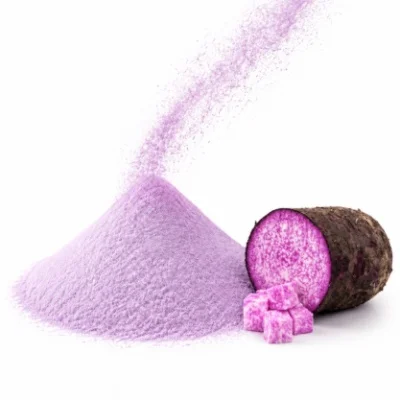
Frequently asked questions
What do you do with ube powder?
The most common ube powder uses are a rehydrated paste for halaya and fillings, cake or cookie batter, and lattes or milk tea.
Is it better to use ube powder or extract?
It depends on the job. Powder adds real yam flavor and body, while extract adds stronger purple and flavor without body. Many bakers use both together.
Why is ube suddenly so popular?
Its natural purple color photographs well and its mild, vanilla-like flavor fits lattes and desserts, so ube has spread quickly across café and restaurant menus.
Do you need to cook ube powder before using it?
Not always. Pre-cooked powder only needs hot liquid for drinks, while fillings and halaya are still cooked until thick. Check the package before skipping the stove.
How long does ube powder last?
Unopened, it lasts from several months to about a year depending on the producer's date. Once opened, keep it airtight and use it within about six months.
Bottom line
What is ube powder used for? Mostly baking, drinks, frozen desserts and natural coloring. Knowing how to use ube powder in each form, as a paste, a dry mix or a drink base, is what gets you a good result.
Need the spec sheet or a sample to test in your recipe? Goodprice Vietnam can send product details and samples through its quote request form.
Note: This article is for general reference on cooking with ube powder. Ratios and final color vary by powder and recipe, so test a small batch or check with your supplier's technical team before large-scale production.