

Which Incoterms Do Vietnam’s Importers and Exporters Prefer Most?
In foreign trade, Incoterms play a core role in defining responsibilities, costs, and the point at which risk transfers between seller and buyer. Although Incoterms 2020 contains 11 terms, Vietnamese businesses tend to favor the following: FOB for exports, and CIF or CFR (CNF) for imports.
Watch the short video below, which shares practical insights into why this shipping trend exists:
FOB - The Common Term for Exports from Vietnam
FOB (Free On Board) is designated exclusively for sea and inland waterway transport.
Under FOB, the seller completes export customs clearance and loads the goods safely onto the vessel nominated by the buyer. Once the goods are placed on board, all risk of loss or damage passes to the buyer.
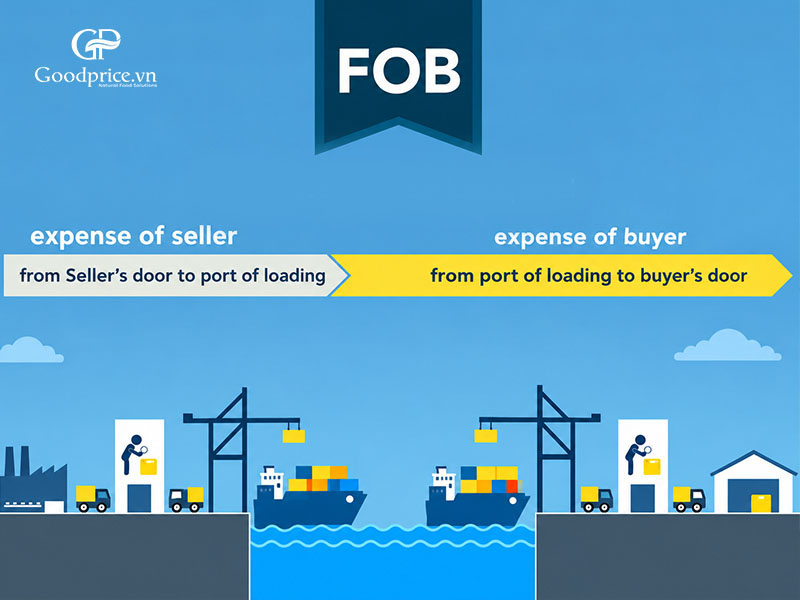
- Seller’s responsibilities: Packing according to the contract, export customs clearance, and bearing costs and risks until the goods are loaded on the vessel at the port of departure.
- Buyer’s responsibilities: Chartering the vessel, paying international freight, bearing the risk during transit, import customs clearance, and arranging insurance if needed.
Why do Vietnamese businesses often choose FOB when exporting?
- Focus on production: Businesses concentrate on product quality and domestic inspection and quarantine, without having to manage fluctuating ocean freight rates.
- Leveraging partners’ logistics: Large buyers often hold long-term contracts with shipping lines, giving them control over schedules and access to preferential freight rates.
- Practical applications: Common for exports of agricultural products, seafood, and wooden furniture.
ICC note: For containerized goods delivered to the carrier at a container yard (CY) before being loaded onto the vessel, businesses should use FCA (Free Carrier) so that the allocation of risk matches the actual handover.
CIF - The Familiar Term for Imports into Vietnam
CIF (Cost, Insurance and Freight) also applies exclusively to sea and inland waterway transport.
Under CIF, the seller loads the goods on board, pays freight to the destination port, and purchases cargo insurance for the shipment.
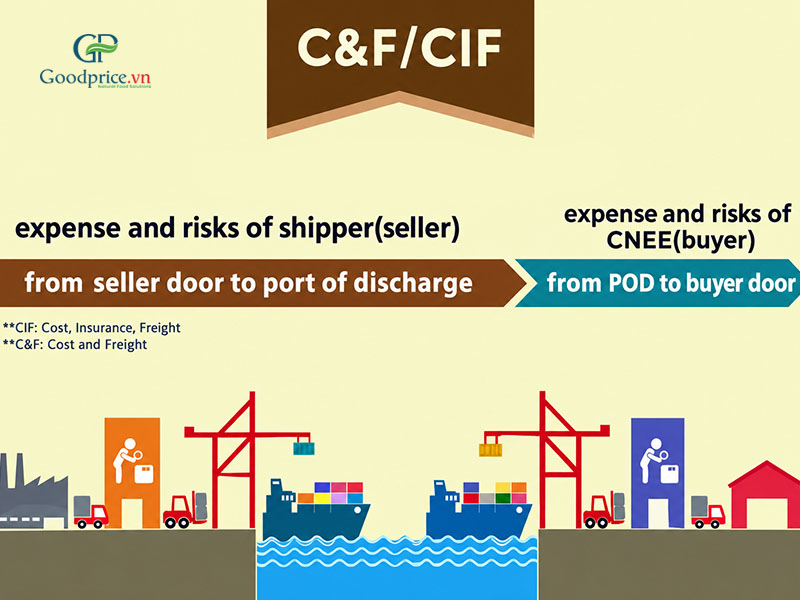
- Seller’s responsibilities: Export customs clearance, loading goods on board, paying ocean freight, and purchasing cargo insurance. Under Incoterms 2020, the default insurance level is the minimum cover equivalent to Institute Cargo Clauses (C), unless the parties agree otherwise.
- Buyer’s responsibilities: Import customs clearance, paying duties and taxes, and paying additional charges arising at the destination port (Local Charges) in accordance with the transport contract and the agreement between the parties.
A common misunderstanding: Even though the seller pays freight and buys insurance, the risk to the goods passes to the buyer as soon as the goods are loaded on board at the port of export. The seller is not responsible for risks during the sea voyage.
Vietnamese businesses often choose CIF when importing machinery or raw materials, so that the foreign partner handles transportation and insurance as a complete package.
CFR (CNF) - A Flexible Option for Those Who Prefer to Arrange Their Own Insurance
In everyday trading it is often called CNF, but the standard name under Incoterms 2020 is CFR (Cost and Freight).
CFR is structured similarly to CIF: the seller clears goods for export, loads them on board, and pays freight to the destination port. The only difference is that the seller has no obligation to purchase insurance.
Importers use CFR when they want to buy insurance themselves through a domestic partner. This allows them to control the scope of coverage and makes it easier to handle claims when an incident occurs.
Quick Comparison of FOB, CIF, and CFR (CNF)
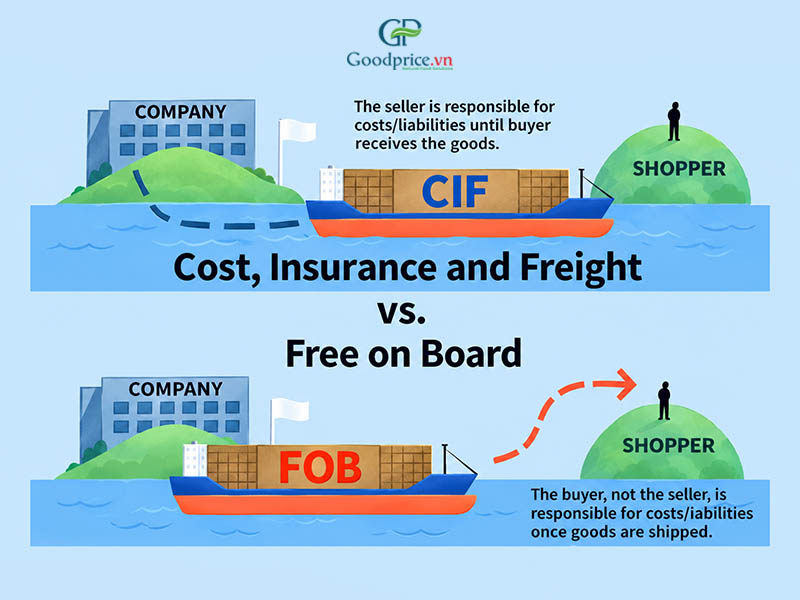
Allocation of obligations under Incoterms 2020:
| Criteria | FOB (Free On Board) | CIF (Cost, Insurance, Freight) | CFR / CNF (Cost and Freight) |
| International ocean freight | Paid by buyer | Paid by seller | Paid by seller |
| Cargo insurance | Buyer decides | Seller buys minimum cover (Clause C) | Buyer decides |
| Point of risk transfer | When goods are loaded on board at port of departure | When goods are loaded on board at port of departure | When goods are loaded on board at port of departure |
| Mode of transport | Sea, inland waterway | Sea, inland waterway | Sea, inland waterway |
| Best suited when | Buyer wants to book the vessel themselves | Buyer needs the partner to handle freight and insurance | Buyer needs the partner to handle freight but buys insurance themselves |
All three terms share the same point of risk transfer: on board the vessel at the port of export. The difference lies in which party pays freight and buys insurance.
Advice for Negotiating Foreign Trade Contracts
The choice of term depends on each business’s negotiating capacity and supply chain management:
- Specify the named place accurately: Always attach the specific port name along with the rules version (e.g., FOB Cat Lai Port, Incoterms 2020) to make terminal and yard costs transparent.
- Use FCA/CPT for containerized goods: Switching to FCA, CPT, or CIP for containerized cargo defines the risk transfer more accurately than the reality of handover at the yard.
- Clarify port surcharges: When importing under CIF or CFR, confirm in advance the Local Charges at the Vietnam end to avoid unexpected costs.
Reference source: Incoterms 2020 rules by the International Chamber of Commerce (ICC).
Contact & Quote Request
For consultation and price quotes, please email us at: [email protected]
You can also contact Goodprice Vietnam directly using the information below for the fastest purchasing experience:
GOODPRICE VIETNAM CO., LTD
- Hotline: (+84) 1900636299
- Phone: (+84) 906368199 or (+84) 916112833
- Email: [email protected]
- Contact Person: Mr. Le Thai