



What are sweeteners? Types and how to choose them
Sweeteners are ingredients that give food and drinks a sweet taste, either replacing or adding to table sugar (sucrose). In food production, they fall into four main groups: nutritive sugars, sugar alcohols (polyols), synthetic high-intensity sweeteners and natural high-intensity sweeteners.
This article explains each group, compares sweetness and heat stability, and covers what to consider when choosing a sweetener for your product, including the labeling rules that apply in Vietnam.
What are sweeteners?
A sweetener is any ingredient that adds sweetness, whether it provides energy like sugar or almost none at all.
In the food industry, the term is used in two ways:
- In the broad sense: Any ingredient that adds sweetness, including nutritive sugars such as dextrose, glucose syrup and fructose.
- In the narrow sense (sweetening additives): Substances on the food additive list that carry an international INS number, such as sorbitol (INS 420), sucralose (INS 955) and acesulfame K (INS 950). These must be used within the list and the maximum levels set by the Ministry of Health.
The difference matters when you build a formula. Nutritive sugars are used as ingredients, while sweetening additives are limited by food category and have their own labeling requirements.
Types of sweeteners in food production
Sweeteners are usually grouped into four types, each with different sweetness, energy and technical functions:
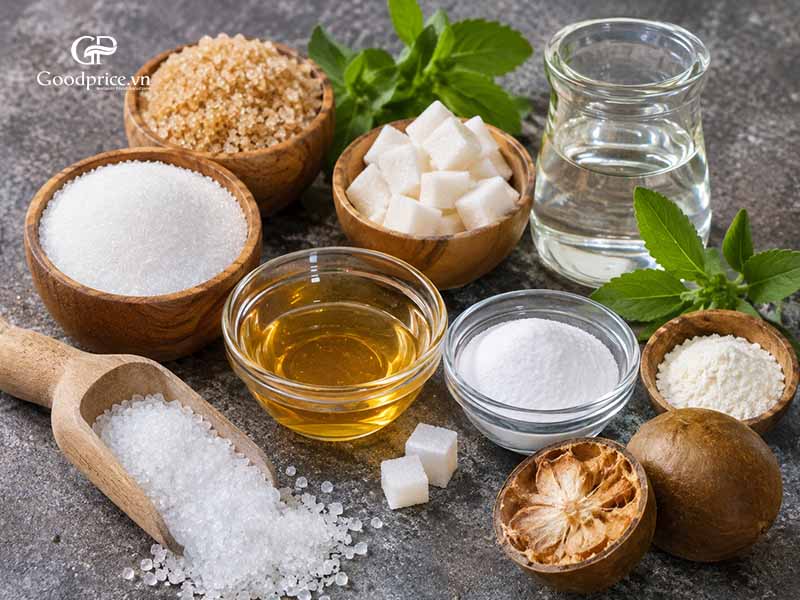
Nutritive sugars
These sugars provide energy and do more than sweeten, adding bulk, body and color during baking:
- Dextrose: Crystalline D-glucose powder, about 70 - 75% as sweet as table sugar. It dissolves quickly and takes part in browning during baking. Goodprice supplies dextrose monohydrate for confectionery, ice cream and beverages.
- Glucose syrup: A solution of several sugars made from starch. Its sweetness depends on the DE value, and it is often used to prevent sugar crystallization in candy and to add body. See our glucose corn syrup.
- Fructose and high-fructose syrups: Fructose is about 1.2 - 1.8 times as sweet as table sugar and is common in beverages. You can read more about fructose.
Sugar alcohols (polyols)
Polyols have a sugar-like structure but provide less energy, and they are often used in candy, baked goods and products that need to stay moist:
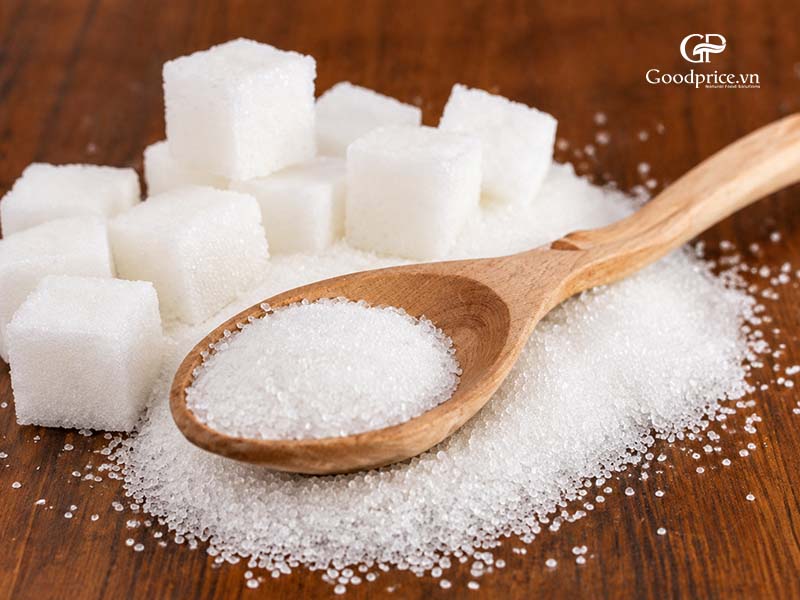
- Sorbitol (INS 420): About 50 - 60% as sweet as table sugar. It holds moisture well, which keeps baked goods soft for longer. Goodprice supplies sorbitol powder and 70% sorbitol solution.
- Xylitol, erythritol, maltitol: Roughly 80 - 100%, 60 - 70% and 80 - 90% as sweet as table sugar.
However, polyols can have a laxative effect in large amounts. In the European Union, products with more than 10% added polyols must warn that excessive consumption may produce laxative effects. In the US, the warning is required when consumers could eat 50 g of sorbitol a day from the product.
Synthetic high-intensity sweeteners
Synthetic sweeteners are hundreds to thousands of times sweeter than table sugar, so only tiny amounts are needed and they add almost no energy:
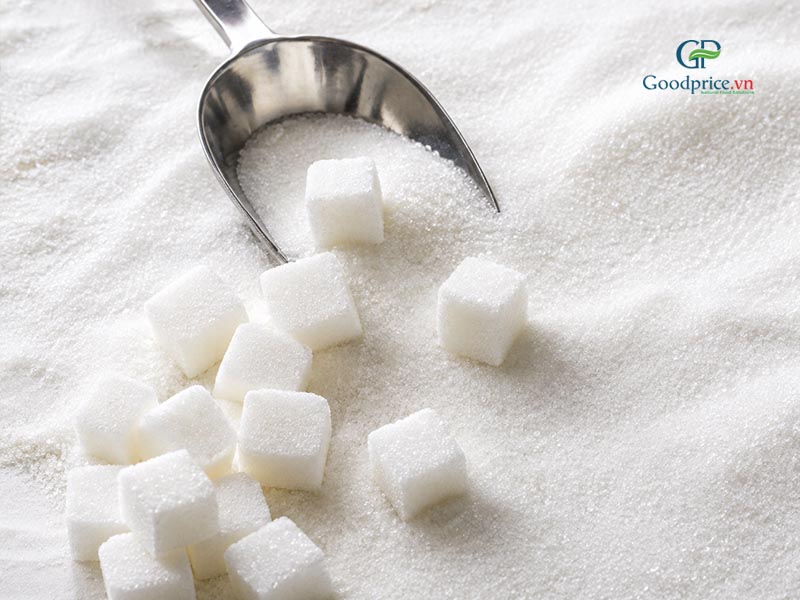
- Sucralose (INS 955): About 600 times as sweet as table sugar and stays sweet at high temperatures, so it works in baked goods. Goodprice supplies sucralose powder.
- Acesulfame K (INS 950): About 200 times as sweet as table sugar, often blended with sucralose or aspartame for a rounder sweetness.
- Aspartame (INS 951): About 200 times as sweet as table sugar but not heat stable. Products with aspartame must warn that they contain phenylalanine, for people with phenylketonuria (PKU).
- Saccharin (INS 954): About 200 - 700 times as sweet as table sugar.
Sweetener 950, which you often see on beverage labels, is acesulfame K, a very common ingredient in sugar-free drinks.
Natural high-intensity sweeteners
These are extracted from plants but are many times sweeter than table sugar:
- Steviol glycosides from stevia (INS 960a): About 200 - 400 times as sweet as table sugar. Goodprice supplies stevia sugar, and you can read more about stevia.
- Monk fruit extract: About 100 - 250 times as sweet as table sugar.
Sweetness comparison of common sweeteners
The table below compares relative sweetness (sucrose = 1) and heat stability of common sweeteners:
| Criteria | INS number | Sweetness vs table sugar | Stable in baking | Typical uses |
| Table sugar (sucrose) | None | 1 (reference) | Yes | Most products |
| Dextrose | None | 0.70 - 0.75 | Yes | Baked goods, ice cream, powdered drinks |
| Fructose | None | 1.2 - 1.8 | Yes | Beverages |
| Sorbitol | 420 | 0.5 - 0.6 | Yes | Candy, soft baked goods, moisture-retaining products |
| Stevia (steviol glycosides) | 960a | 200 - 400 | Yes | Beverages, reduced-sugar products |
| Acesulfame K | 950 | About 200 | Yes | Sugar-free beverages |
| Aspartame | 951 | About 200 | No | Beverages, products not heated |
| Sucralose | 955 | About 600 | Yes | Baked goods, beverages, dairy |
These values are a guide. Actual sweetness changes with concentration, temperature and the other ingredients in the formula.
How to choose a sweetener for production
No single sweetener fits every product. When choosing one, consider these factors:
- Role beyond sweetness: Nutritive sugars and polyols also add bulk, body, moisture and color in baking. High-intensity sweeteners are used in tiny amounts and cannot replace that mass, so they are usually blended with bulking agents or polyols.
- Heat processing: Baked or sterilized products need heat-stable sweeteners such as sucralose, acesulfame K or stevia. Aspartame suits products that are not heated.
- Aftertaste: Some high-intensity sweeteners leave a bitter or metallic note at high concentrations. Blending two or three of them is a common way to get closer to the taste of sugar.
- Label positioning: Sugar-free or reduced-sugar products usually rely on high-intensity sweeteners or polyols. Products positioned as natural should favor stevia or monk fruit.
- Formula cost: Compare cost at equal sweetness, not just price per kg, since high-intensity sweeteners are used in very small amounts.
- Regulations: Check that your chosen sweetener is permitted for your food category and its maximum level before you finalize the formula.
Run small trial batches and sensory tests before moving to full production.
Are sweeteners safe?
Permitted sweeteners have been assessed by regulators as safe when used within approved limits. Each has an acceptable daily intake (ADI). According to the FDA, the ADI is 50mg for aspartame, 15mg for acesulfame K and 5mg for sucralose per kg of body weight per day.
In 2023, the International Agency for Research on Cancer (IARC) classified aspartame as possibly carcinogenic to humans (Group 2B), based on limited evidence. At the same time, the FAO/WHO Joint Expert Committee on Food Additives (JECFA) kept the ADI at 0 - 40mg per kg of body weight. For manufacturers, what matters is using permitted sweeteners at the right levels and labeling them correctly.
Sweetener regulations and labeling in Vietnam
In Vietnam, sweetening additives are regulated under Circular 24/2019/TT-BYT on the management and use of food additives, as amended by Circular 17/2023/TT-BYT.
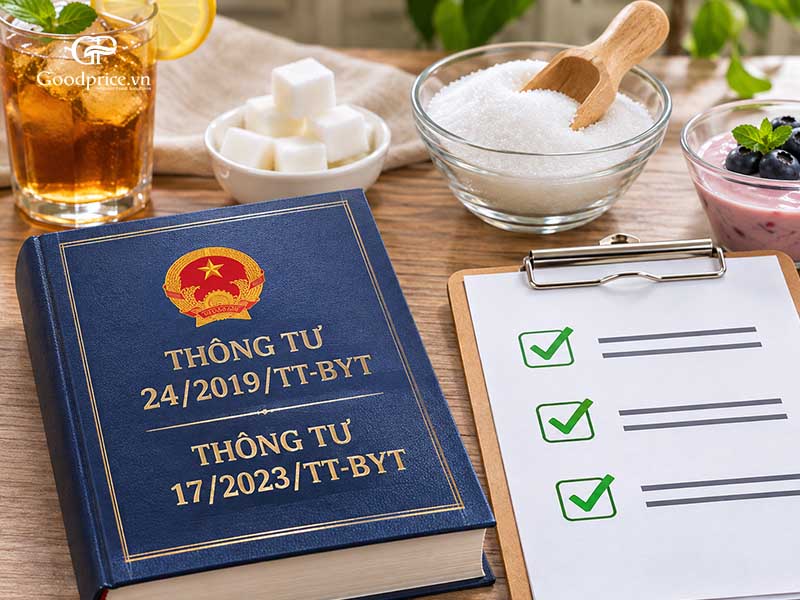
When using them, keep these points in mind:
- Permitted list: Use only sweeteners on the permitted list, for the right food category.
- Maximum levels: Do not exceed the maximum level set for each food category.
- Correct labeling: Under the labeling rules, a sweetener must be listed by group name and by its name or INS number, and marked as natural, nature-identical, synthetic or artificial. For example: Sweetener: Aspartame (Artificial).
Before registering a product, check the formula against the latest consolidated text from the Ministry of Health on food additives.
Conclusion
Sweeteners fall into four main groups, each solving a different problem: nutritive sugars for bulk and color, polyols for moisture and lower energy, and high-intensity sweeteners for sugar reduction. When choosing, look at the role of the sweetener in your formula, heat processing, aftertaste, cost and labeling rules. Goodprice supplies a range of sweetening additives for food production, including dextrose, glucose syrup, sorbitol, sucralose and stevia. Send us a quote request with your intended use and we will advise you.
Frequently asked questions
What is sweetener 950?
Sweetener 950 is acesulfame K, a synthetic sweetener about 200 times as sweet as table sugar. It is heat stable and often blended with other sweeteners.
What is sweetener 955?
Sweetener 955 is sucralose. It is about 600 times as sweet as table sugar and stays sweet at high temperatures, so it can be used in baked goods.
What are natural sweeteners?
The most common are steviol glycosides from stevia and monk fruit extract. Both are hundreds of times sweeter than table sugar.
Is sorbitol a sweetener?
Yes. Sorbitol (INS 420) is a polyol, about 50 - 60% as sweet as table sugar, and it is also used to keep products moist.
Are sweeteners the same as sugar?
Not always. Some sweeteners are sugars, such as dextrose and fructose, while polyols and high-intensity sweeteners are not.