

Goodprice Vietnam – Trusted Export Supplier of Premium Purple Yam Powder
Ube powder export comes down to three things a buyer can verify on paper: the right species and spec, a facility registered where the market requires it, and a complete document set for every lot. Miss one and the shipment can stop at the border. Food from a facility not registered with FDA, for example, is held at the US port until registration is complete.
This guide covers what makes Vietnam a practical source, the ube powder Goodprice Vietnam supplies, and the documents and import rules for the US, EU, South Korea and Japan.
Made from 100% selected fresh ube (purple yam) tubers, with a natural purple colour, fine texture and full characteristic flavour. An ideal solution for colour and texture in bakery, mooncake fillings, beverages and food processing, produced to ISO 22000:2018.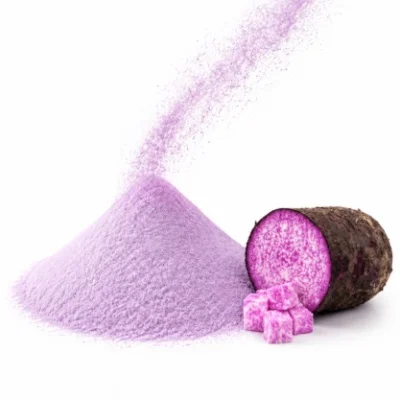
What makes ube powder export-ready?
Ube powder is export-ready when the buyer can confirm its species, grade and paperwork before the first order. Importers usually clear documents first and taste samples second, so these three points decide whether a lot is accepted:
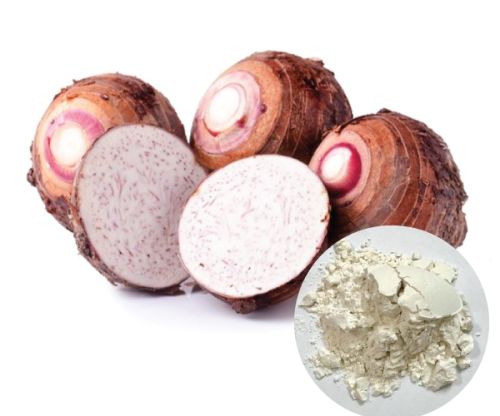
- Species: Genuine ube is purple yam, Dioscorea alata. Purple sweet potato (Ipomoea batatas) and taro (Colocasia esculenta) are different crops, and some powders sold as ube are made from sweet potato, so buyers ask for the raw material on the spec.
- Grade: Whole milled ube powder is the dried tuber, ground fine. Beverage grades are often spray-dried onto a maltodextrin carrier for better solubility, and the label has to declare that carrier.
- Paperwork: A spec sheet with numbers, a test report for each lot and the facility's food safety credentials.
If you need the root itself rather than powder, frozen purple yam is the closer fit.
Specs buyers check on every ube powder lot
Buyers check six specs on every ube powder lot, three for quality and three for safety, while the destination market and the contract set the exact limits:
- Moisture: Powder with high moisture cakes and grows mold during weeks in a container through hot regions. Low moisture and sealed bags keep it free-flowing until it reaches the warehouse.
- Mesh: Fineness is measured in mesh, and a higher number means a finer powder. Fine powder disperses evenly in drinks, while a coarser grind gives body to batters and fillings.
- Color and flavor: The violet should come from the yam itself, with no added colors or flavors, and stay consistent from lot to lot.
- Microbiology: Typically Salmonella, E. coli, total plate count, and yeast and mold.
- Heavy metals: Lead, cadmium, mercury and arsenic, which a root crop can pick up from soil and irrigation water.
- Pesticide residues: Each market sets its own maximum residue levels (MRLs), so the same exported ube powder can pass in one country and fail in another.
Why source ube powder from Vietnam?
For ube powder export, Vietnam offers three practical advantages. Buyers get purple yam grown at home, the natural color and flavor of purple-fleshed varieties, and preferential duty in the EU, Korea and Japan under free trade agreements. Each lot still has to pass the specs above.
Raw material grown at home
Purple yam is native to Southeast Asia and widely grown in Vietnam, so Vietnamese processors source roots locally instead of importing them. Dioscorea alata was domesticated in this region and is now cultivated in nearly every Southeast Asian country.
The local gene pool is broad, too. Vietnam's national plant genebank holds 102 purple yam accessions collected from seven ecological zones.
The Dong Thap Muoi area in the Mekong Delta is one of the main growing areas, since the crop tolerates acid sulfate and clay soils. Farmers there report yields of around 15 tonnes per hectare.
Purple yam can be planted year-round and is harvested five to six months later, so fresh roots arrive in several batches a year for steady milling.
Color, flavor and fineness
Color and flavor depend first on the variety. Vietnam grows both white- and purple-fleshed yams, and purple types include local varieties known as tim than and tim bong lau, so ask which variety a powder comes from when you compare samples. At Goodprice Vietnam, flesh color is one of the checks at intake.
The violet comes from cyanidin-type anthocyanins in the flesh, so pure powder needs no added color. These pigments shift with pH, turning reddish in acidic products and blue-gray at higher pH, so test the color in your finished product before you order.
Ube powder tastes mildly sweet and nutty, with a vanilla-like aroma. Fineness depends on milling rather than variety, commonly 80 to 120 mesh, so put it on the spec.
Trade advantages for export
The biggest trade advantage of Vietnamese ube powder is preferential duty in the EU, South Korea and Japan under free trade agreements. Shipments to the EU use an EUR.1 certificate under EVFTA, to Korea Form VK or AK, and to Japan Form VJ or AJ.
The US has no free trade agreement with Vietnam, so US shipments use Form B. Your customs broker can confirm which form gives the lower rate for your tariff line.
Roots grown and processed in Vietnam also make origin straightforward to document when you claim those preferences.
Regional supply is shifting as well. Since mid-August 2026, the Philippines has suspended exports of fresh ube and planting material, while processed powder can still be exported. That gives buyers another reason to add a second origin.
Can Goodprice Vietnam supply your ube powder export order?
Yes. Goodprice Vietnam is an ube powder supplier that makes the powder in its own factory in Ba Diem, Ho Chi Minh City, under ISO 22000:2018, with capacity of 100 tonnes a month. It already exports food ingredients to South Korea and Japan and is now targeting buyers in the US and EU.
Specifications and packaging
Purple yam is sorted by flesh color and freshness, then peeled, washed, sliced and steamed before low-temperature drying. After milling, every lot is checked for color, moisture and fineness before packing.
| Spec | Value |
|---|---|
| Raw material | 100% purple yam |
| Moisture | Below 10% |
| Fineness | 80–120 mesh |
| Color | Natural violet, no added color |
| Additives | No preservatives, no flavorings |
| Shelf life | 12 months |
| Packing | 25 kg bags (kraft, PP/PE, jumbo) |
The powder is pure purple yam with no sweet potato and no carrier, so the ingredient on the label is purple yam (Dioscorea alata).
If your market needs a different mesh or bag size, we agree it on the spec and send samples at that spec before production. Microbiology, heavy metal and residue limits for your destination are set in the contract, together with the testing lab. Our standard unit for container loads of bulk ube powder is the 25 kg bag.
Documents, markets and shipping terms
For US buyers, the step that falls on the manufacturer, FDA facility registration, is already in place. Credentials and terms for export orders include:
- Credentials: A food safety certificate issued in Vietnam, ISO 22000:2018, halal certification and FDA facility registration.
- Export documents: Phytosanitary certificate and certificate of origin for each lot.
- Incoterms: FOB Ho Chi Minh City port, or CIF to your destination port.
- Samples: Sent before you order, so you or your customer can run trials.
We also offer OEM private label production in eight steps, from concept to export, and the Goodprice Vietnam R&D team helps with spec and formulation for your market.
An order moves from your request to samples, an agreed spec and document list, the contract, production with lot checks, and shipping. Price depends on spec, packing, volume and Incoterm, so we quote each request. Send your destination market, spec and annual volume to request a quote.
What documents ship with an ube powder export order?
An ube powder export order usually ships with six groups of documents, and the destination market and the contract decide the exact list:
- Commercial invoice and packing list: Value, number of bags, and net and gross weight for each lot code.
- Bill of lading: Issued by the carrier or forwarder and used to collect the cargo at the destination port.
- Certificate of origin: The form that matches your destination market.
- COA or lot test report: Results for that lot against the destination's limits.
- Phytosanitary certificate: Issued per lot when the market or the buyer requires it.
- Facility certificates: ISO 22000, halal or a food safety certificate, plus an allergen statement on request.
Exported ube powder is usually declared under HS 1106.20, the subheading for flour and powder of roots and tubers of heading 0714. Confirm the full code with your customs broker.

What do the US, EU, Korea and Japan require for ube powder?
For ube powder export, the biggest difference between these four markets is who registers before the first shipment. The US and South Korea require the foreign facility to register, while Japan and the EU place the main checks on the importer.
| Requirement | US | EU | South Korea | Japan |
|---|---|---|---|---|
| Facility registration | Required with FDA, renewed every 2 years | Importer carries primary responsibility | Required with MFDS at least 7 days before first import | Not required, importer files at the port |
| On arrival | Prior Notice filed before arrival | Official controls under EU food law | MFDS import inspection | Import notification at a quarantine station |
| Main focus | Registered facility, importer verifies supplier (FSVP) | Pesticide residues, contaminants | Registered facility, possible on-site audit | Residues under the Positive List |
| Preferential certificate of origin | Form B, no preference | EUR.1 (EVFTA) | Form VK (VKFTA) or AK (AKFTA) | Form VJ (VJEPA) or AJ (AJCEP) |
- US: Foreign facilities register with FDA and renew every two years, and food from an unregistered facility is held at the port. Registration is not FDA approval. The importer files Prior Notice and verifies the supplier under FSVP.
- EU: Pesticide limits follow Regulation (EC) No 396/2005, with drying taken into account, and contaminants such as lead and cadmium follow Regulation (EU) 2023/915. A phytosanitary certificate is commonly required.
- South Korea: The overseas facility registers with the Ministry of Food and Drug Safety (MFDS) at least seven days before the first import, renews every two years and may face an on-site audit.
- Japan: The importer files an import notification at a quarantine station. Any chemical without a specific MRL is held to a uniform 0.01 ppm under the Positive List.
Goodprice manufactures and supplies ube (purple yam) powder in bulk to food factories, OEM brands and importers. Direct control of raw-material sourcing, flexible MOQ, and OEM production to your own formula and packing specification.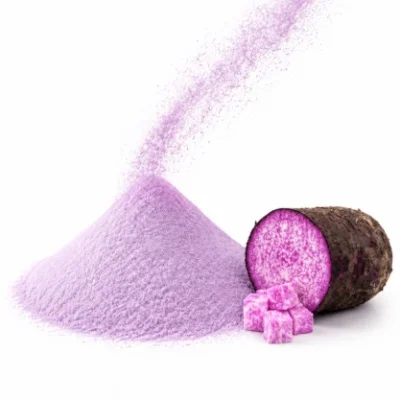
Ube powder export FAQs
Is ube powder the same as purple sweet potato powder?
No. Ube is purple yam, Dioscorea alata, while purple sweet potato is Ipomoea batatas. They are different crops, so the label has to name the right one.
Does an ube powder supplier need FDA registration to ship to the US?
Yes. The foreign facility that makes or packs the powder must register with FDA and renew every two years. Registration is not FDA approval of the product.
How is ube powder made?
Purple yam is peeled, sliced, cooked, dried and milled into powder. At Goodprice Vietnam, the yam is steamed before low-temperature drying, and each lot is checked before packing.
Where does ube come from?
Ube is most closely tied to the Philippines, where it is a dessert staple, but purple yam is grown across tropical Asia. Vietnam plants it year-round.
What HS code is used for ube powder?
Usually 1106.20, the subheading for flour, meal and powder of roots and tubers of heading 0714. Confirm the full code with your customs broker.
Conclusion
Ube powder export works when the facility, each lot and the document set all match the destination market, so settle the market first. See the spec on the Goodprice Vietnam purple yam powder page or email [email protected] for a quote.
Note: Import rules change over time. This article is for reference only, so confirm requirements with your importer and the relevant authorities before each shipment.